I like to read. Having a Kindle makes it easy to take a book anywhere and with Libby, I can check them out easily from the library.
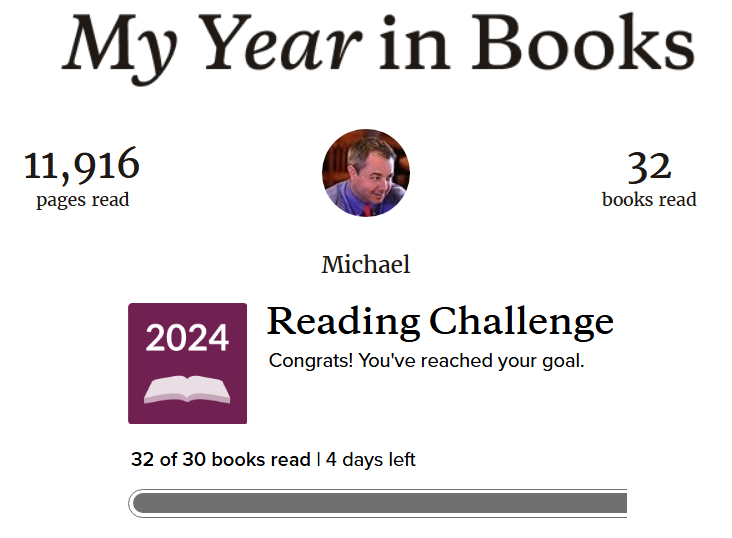
Since I read electronically, it’s easy to update Goodreads. Goodreads has a yearly challenge where you set a number of books to read and it helps track it.
This year, I set my target for 30 books and exceeded that goal with 32 read.
At the bottom, I’ll add the list of all the books that I read this year.
Here are the 3 books I found most interesting. They may not be the most well written, but they are the ones I enjoyed the most and think about.
Ra by qntm The author, qntm, is also known for the slightly more discussed novel, There Is No Antimemetics Division, but I found Ra fascinating. Bringing us a world of magic as engineering in the beginning, the book makes a complete flip in the middle and creates yet another intriguing world. I wish there was a sequel, but unlikely given how the novel ends.
The Sword of Kaigen by M.L. Wang I heard about The Sword of Kaigen on #booktok with huge amounts of praise. All of the acclaim is true. An alternate reality of an alternate Asian world filled with war, elemental magic, and family drama that keeps you sucked into the world built by M. L. Wang. It’s one of those books that’s hard to put down when it’s time to go to sleep.
Dark Wire by Joseph Cox Joseph Cox is one of the founders of 404media, an investigative journalism site that does great work. His work on Dark Web subjects led him into the story of how the FBI got in the business of running an encrypted mobile phone company to spy on the secrets of criminal gangs on a global scale. Well written and detailed, the story is catnip to hacker types, both old and new. In addition to detailing the story of Anom phones, he also discusses the scale and scope of the illegal drug trade that operates a billion dollar economy hidden from public view.
All three of these books have my highest recommendation.
My honorable mention goes to A Wizard’s Guide to Defensive Baking by T. Kingfisher. If you are into the cozy fantasy genre, this book is a delight. Relaxing and fun, it’s a perfect book to escape the chaos of the real world.
My 2024 year in books (reverse chronological order)
The Pillars of the Earth by Ken Follett Siddhartha by Hermann Hesse Cursed Cocktails by S.L. Rowland Alien Clay by Adrian Tchaikovsky Saevus Corax Deals with the Dead by K.J. Parker A Wizard’s Guide to Defensive Baking by T. Kingfisher A Man Without a Country by Kurt Vonnegut Jr. Path to Villainy: An NPC Kobold’s Tale by S.L. Rowland System Collapse by Martha Wells The Book of Doors by Gareth Brown Moon Over Soho by Ben Aaronovitch Starter Villain by John Scalzi The Things We Make by Bill Hammack Dark Wire by Joseph Cox Emily Wilde’s Encyclopaedia of Faeries by Heather Fawcett Service Model by Adrian Tchaikovsky Ra by qntm Arriving Today: From Factory to Front Door by Christopher Mims Built: The Hidden Stories Behind Our Structures by Roma Agrawal The Sword of Kaigen by M.L. Wang Rivers of London by Ben Aaronovitch Mickey7 by Edward Ashton The Jinn-Bot of Shantiport by Samit Basu Translation State by Ann Leckie Ironclads by Adrian Tchaikovsky Revelation Space by Alastair Reynolds A Darker Shade of Magic by Victoria E. Schwab The Blacktongue Thief by Christopher Buehlman Quantum Radio by A.G. Riddle Where the God-Knives Tread by A.L. Goldfuss To Shape a Dragon’s Breath by Moniquill Blackgoose A City on Mars by Kelly Weinersmith
Over the last few years, I’ve accumulated beeswax from the apiary and during honey harvests. I’ve made videos about harvesting the wax and refining it.
I have enough now to do some fun things with it, like making some candles.
On a recent episode of the Vergecast (a podcast worth listening to) one of the topics is about the state of the cable TV business. Host David Pierce predicts “traditional cable TV is going to be basically dead and gone” in 2025.
This is a topic I can speak to with some actual knowledge having worked in the television industry for 30+ years, with specific work in cable.
Back in the late 90s, cable TV was on the rise. There was no concept of internet steaming and large media companies were cashing some fat checks from cable TV revenue. I led the buildout of the Disney Channel playback facility in 1996 and was told to reserve space for many more channels.
To explain the boom in cable channels at the time, I need to explain a little about the economics of the era.
First, remember in the late 90s, the only way to watch “cable television” is via a cable or satellite TV provider (think Comcast or DirecTV). There was no streaming and Youtube didn’t even get started until 2005.
People were watching cable television and their appetite for more seemed unsatiable. I’ll use the term ‘cable provider’ to refer to the companies that managed getting the television signal to the home and provided the set-top box. I use ‘media company’ to refer to the companies that made shows for a cable channel and sent out the signal for a cable provider to use.
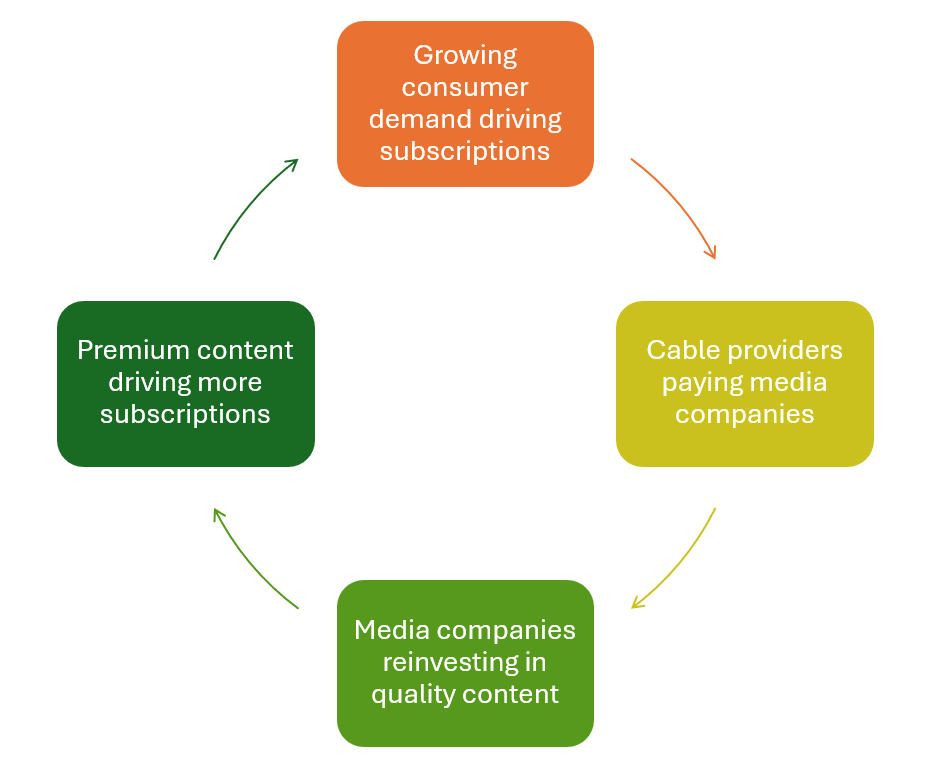
The virtuous cycle at the time worked like this.
People were willing to pay cable providers to get access to shows on various cable networks.
Cable providers made money from cable subscriptions.
Cable providers paid media companies for the right to provide the channels to subscribers.
Media companies made money via advertising on cable channels. The more eyeballs the more money.
Media companies invest in more/better shows and more channels to increase demand for cable subscriptions which they request more money from cable providers.
The better the content, the more people subscribed to cable tv, increasing revenue for the cable provider and the media companies (via advertising).
Hence an explosion of cable channels in this era to fill all kinds of niches that people were interested in.
Critical was the negotiations between the media companies and cable providers for the rates paid. In general, media companies were paid a certain price per cable subscriber. These rates ranged from several dollars for top ‘must have’ channels (such as ESPN) to several cents for niche channels.
Media companies held the upper hand in these negotiations as they forced bundles of all their channels onto the cable providers, even though the cable providers didn’t want all the channels. The ‘must have’ channels, like ESPN and Disney Channel, were in demand by people at home, so to get them the cable providers had to accept an entire block of additional channels and agree to pay some cents per subscriber for them as well. Cable providers passed these costs onto people at home, starting the inevitable rise in cable subscription prices.
Slowly, as streaming technology grew, prices for cable went up because Wall Street demands continuous growth every quarter. Stress on the industry grows with difficult negotiations, lots of hardball, and customers frustrated by poor service and price hikes.
Deal points start to hinge on ‘TV Everywhere’ the industry term for granting rights to stream shows online to people who pay for traditional cable. This is where to watch HBO Max online, you could sign in through DirecTV (or whatever cable provider), and watch shows. The backend is complicated and in some ways cripples pure streaming plays due to contractual obligations, but it tempers the anger of frustrated people at home just trying to watch their shows online.
The cable contracts are still huge cash cows for media companies, but nothing gold stays
As the Streaming Wars begin, it is traditional cable that in large part foots the billions to spin up new services within the media companies. As a result, cuts start being made on the cable networks to free up cash so Wall Street remains happy that ‘number go up’.
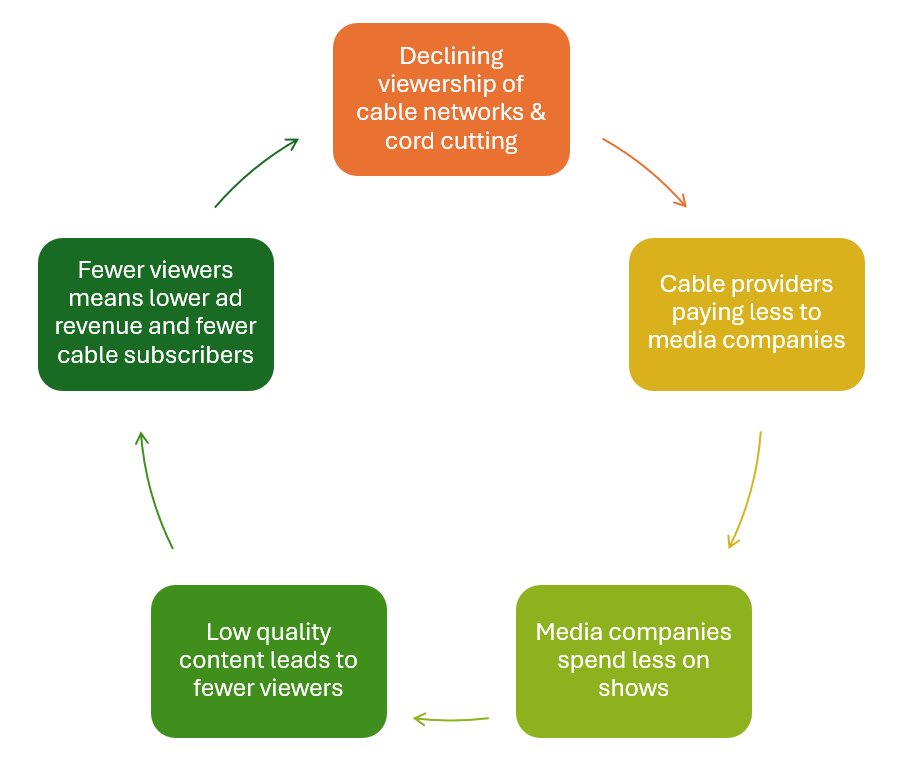
Thus starts the vicious cycle for cable networks.
As the networks, spend less on shows, viewers look elsewhere. With lower viewership, it hammers the economics in terms of lower advertising revenue and less that can be demanded in per subscriber fees.
With less income, there are less good shows, which leads to drops in ratings, which leads to worse financials for the media companies, who then continue to cut because they need the profit ‘number go up’.
Cord cutting begins in earnest as people are tired of cable bills and start turning to streaming. The pure streaming plays like Netflix, Hulu, Youtube, and others develop into almost complete replacements for traditional cable providers. If the early years, it’s inconsistent and difficult to set up, but the ecosystem begins to form with Roku, Chomecast, Apple, and others bringing simplicity to the home set up.
The early cord cutters preach their gospel to friends and family, and it takes root in millennials and Gen Z who were raised in the internet era. Most people under 40 don’t even consider paying for traditional cable as they can get everything they want over the interwebs.
All that said, there is still a large number of people that turn on the TV in the evening and just flip channels all night and watch live, linear TV for hours on end. The horror. I know. But come to grips with the fact that ~40% of American households still pay for traditional cable TV service, probably paying ~$125-150/month. It remains a juggernaut of cash flow, offsetting other costs in the transition to streaming.
These viewers are mainly the older generations, who still have buying power and some advertisers want to reach. But this group continues to shrink. There is still money to be made, so the businesses continue onwards, slowly shrinking. But the future is in streaming as everyone knows.
You can see the media companies try to adapt with low cost reality shows, police/legal procedurals that appeal to the older demographics, and paying for sports licensing which is truly the only appointment television left.
In the long term, only the cable networks with the highest brand identity will survive the transition to a mainly streaming world. People will talk about what shows they watch but can rarely tell you if they came from a cable network or were only on a streaming provider. A network like Bravo has the needed brand feelings in viewers, but few others do. Bafflingly, Warner Bros. Discovery took one of the most well known cable brands, HBO, and tossed it out the door to call their streaming service Max. People literally know the sound of an HBO sound starting, but couldn’t tell you much about Max.
Yes, the traditional cable TV business is going through some things.
But it will be around quite a while longer because there is still money to be made and a lot of people don’t like change, but they do like their cable remote.
We don’t get harsh winters in Los Angeles, but the cold and reduced forage do have an effect on the bees. I looked in on the ladies and the Pink Hive was simply too weak to survive, as I had feared over the last few inspections.
The queen is two years old. As queens get older, the can become less productive and slow or stop laying eggs. I had been seeing the drop off over the last few inspections. Without new bees, a colony is doomed.
I ended up combining the Pink Hive into another, to save as many of the bees as I could. Unfortunate, but still hoping for the other three stronger hives to make it to spring.
After eight years of dormancy, this weblog has awakened from it’s long slumber, like a creature risen from death by a sorcerer and given new life.
I started blogging in January 2000, making this weblog almost 25 years old. This probably makes me a blogging ‘old head’, having gone to weblog meetups IRL when the ideas were new, meeting the first generation of bloggers and blog software writers at the early SxSW Interactive conferences, and lurking in the many IRC channels of the early Web 2.0 era.
But as Twitter, Tumblr, Facebook, Instagram, and modern social media began to consume the interwebs, my posting on this weblog fell off in 2014 and stopped completely in 2016.
Thanks to the command line wizardry from my friend Greg, color ideas from my wife Michele, and WordPress code help from claude.ai, I was able to restore this blog into operation.
Why restart a weblog in 2024?
I stopped posting here in 2016, but I didn’t stop writing and doing things online. I started writing at Medium, as it was simple and easy to use. I like to make videos and posted them on Youtube and TikTok.
Most of my online interaction was on Twitter and Discord, with frequent posting on those platforms. Over time, I’ve became disenchanted with Twitter and stopped using it. I’m mainly on Bluesky these days and enjoy it.
The idea of having a central place to put all the things I do online is appealing to keep some sort non-ephemeral record of my online musings. I will still be posting stuff on other platforms, but having a place here, that I control is appealing.
I had heard about POSSE before and Greg discussed it with me further as I tried to decide what to do. Made a lot of sense to me.
How cruftbox.com was returned to the land of the living
Previously, the blog ran on Movable Type, which evidently still exists (It’s big in Japan!). Greg recommended a move to WordPress, as it is the defacto standard system these days, compatible with almost everything. There has been recent drama in the WordPress community, but it’s a safe choice to use and leaves me the opportunity of migrating to a different CMS in the future.
Greg seemed to effortlessly transmogrify my broken Movable Type system into a modern WordPress operation and I began learning how to use it more fully. Previously, I ran a simple WordPress blog about my thoughts on EVE online, but starting from scratch and not really modifying much, it was a simple posting tool.
I love Andy’s sidebar linkblog and made my own version with the help of claude.ai which was able to write the WordPress code for me. I know it’s underhyped, but this AI stuff may catch on.
For those that don’t know me, I made a short About page to give a little insight into who I am.
Mostly, I’ll be posting videos and occasionally an actual written post about whatever is on my mind. The linkblog will be an easy way for me to share interesting items that I come across. I’ll keep tweaking it to scratch my itches.
1. We give out full size candies 2. Make a listing of all costumes 3. Make a timelapse movie
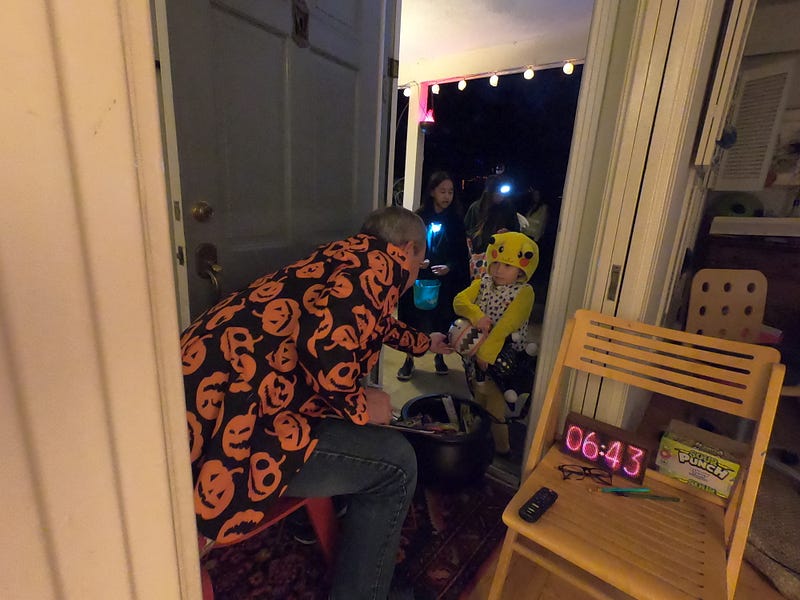
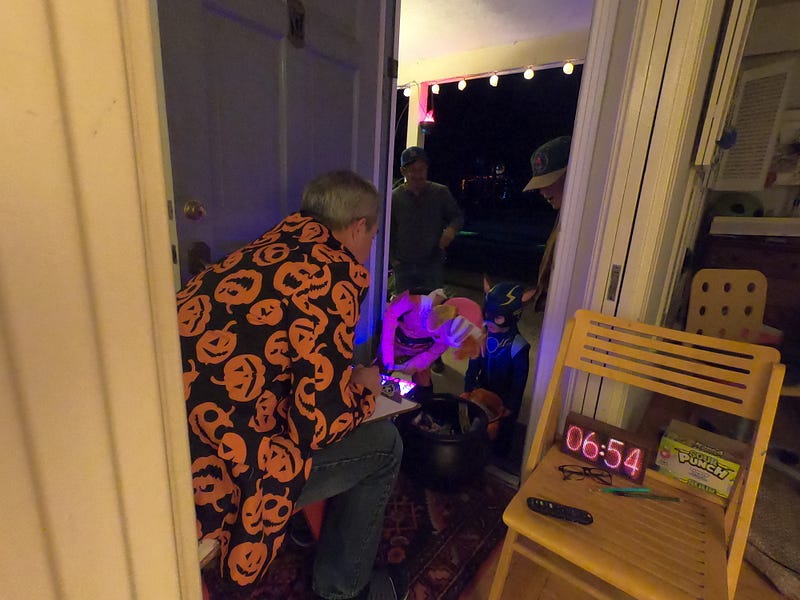
I let the kids choose their favorite candy themselves. This can sometimes lead to a prolonged choosing process and debate. The moments of “OMG” and “wow” are wonderful as they realize the candies are full size.
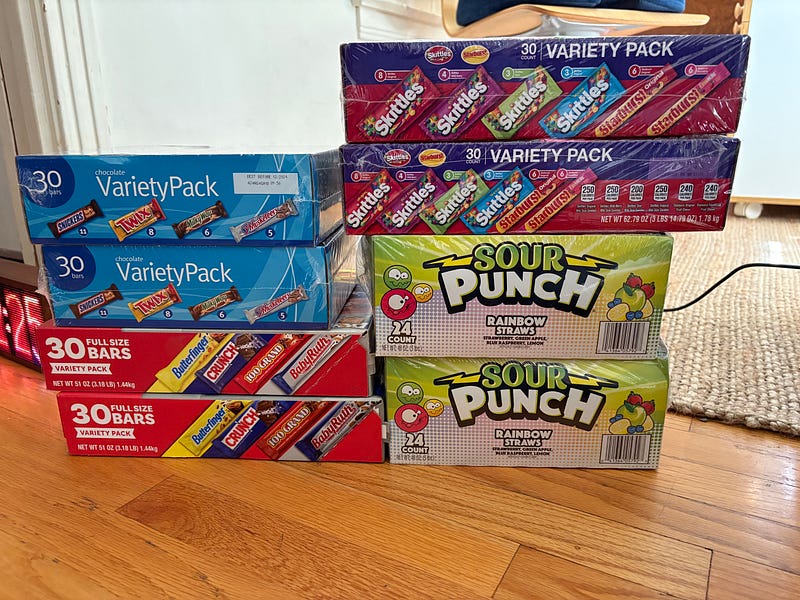
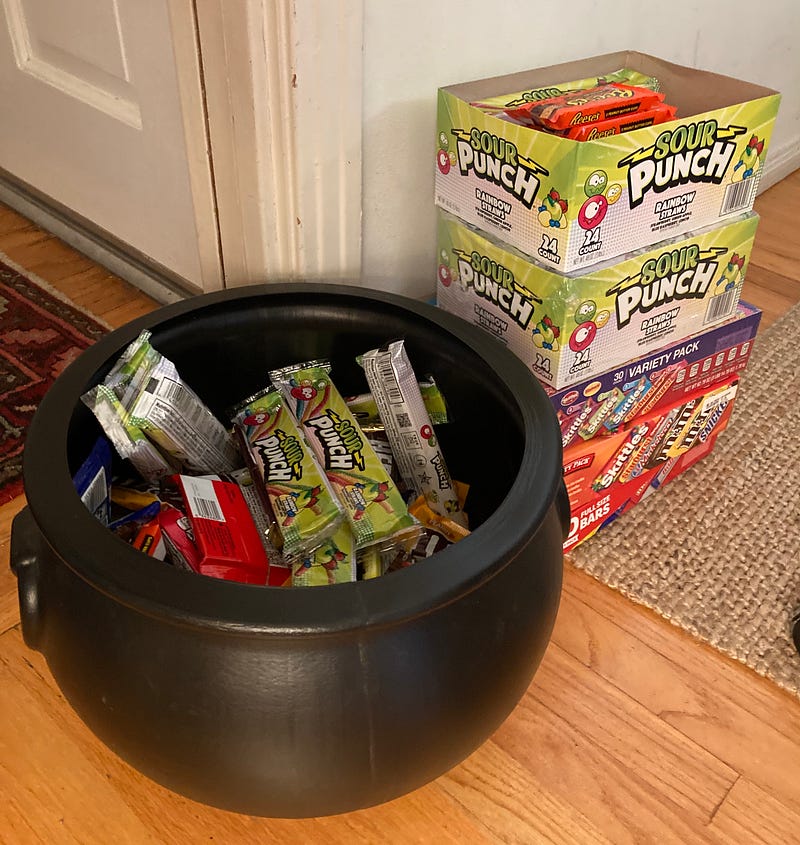
Full size candy
The excitement upon seeing full size candies makes it all worth it.
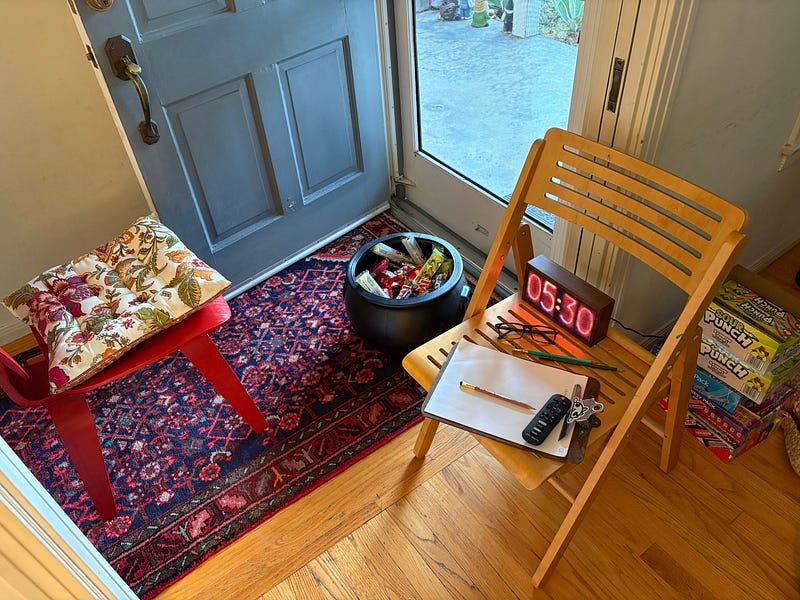
Ready for the kids to arrive
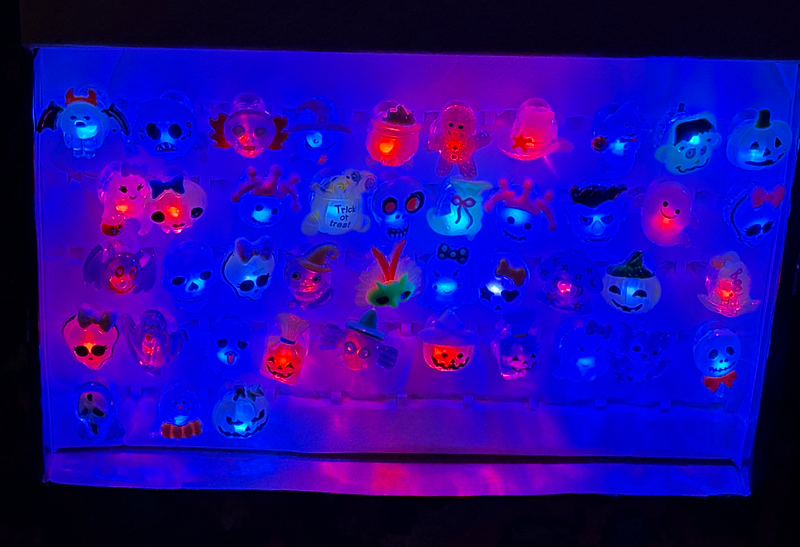
I also gave out LED light up rings this year again. Kids of every age enjoy them.
Kids would spend more time choosing a ring than candy.
When people come to the door, I ask every person what they were dressed as and wrote down their answers. I am careful to ask what they are, accepting their answers rather than interpreting what I see.
The time-lapse takes place over about three and a half hours that is reduced to around 90 seconds for your viewing pleasure.
A few of the costumes I liked this year.
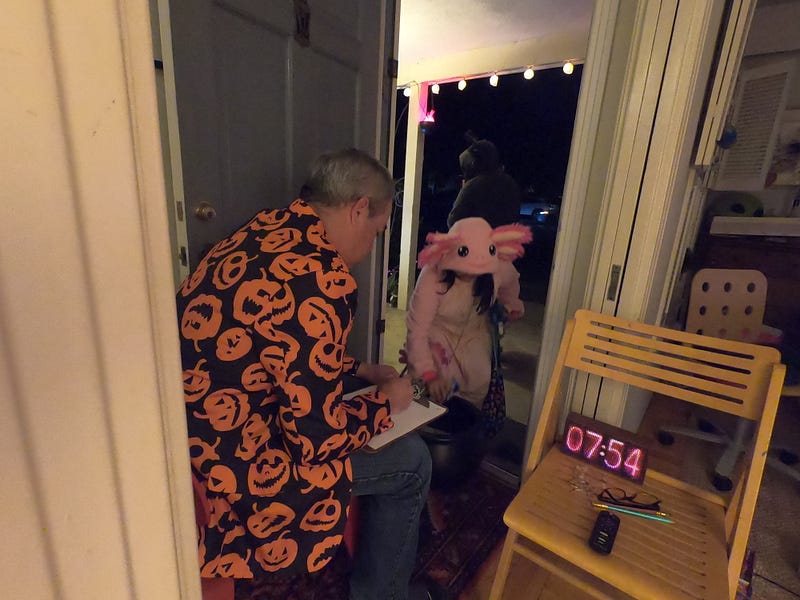
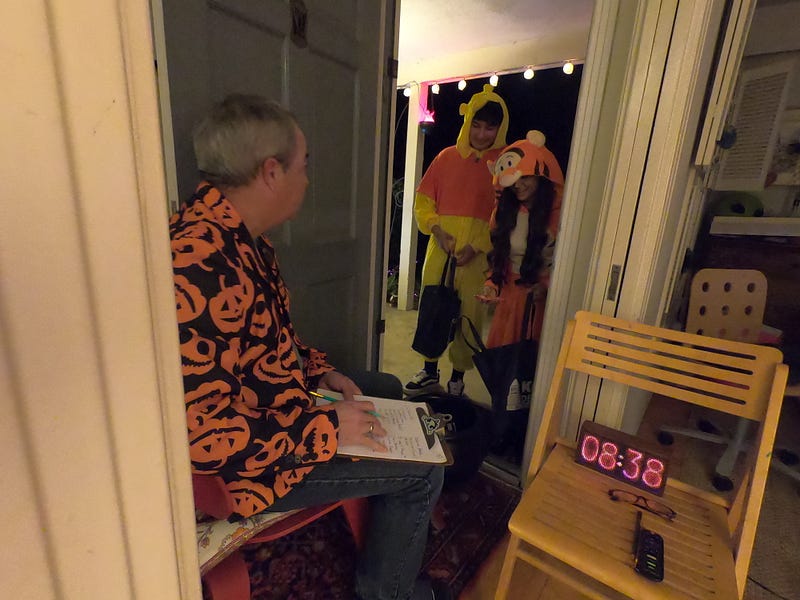
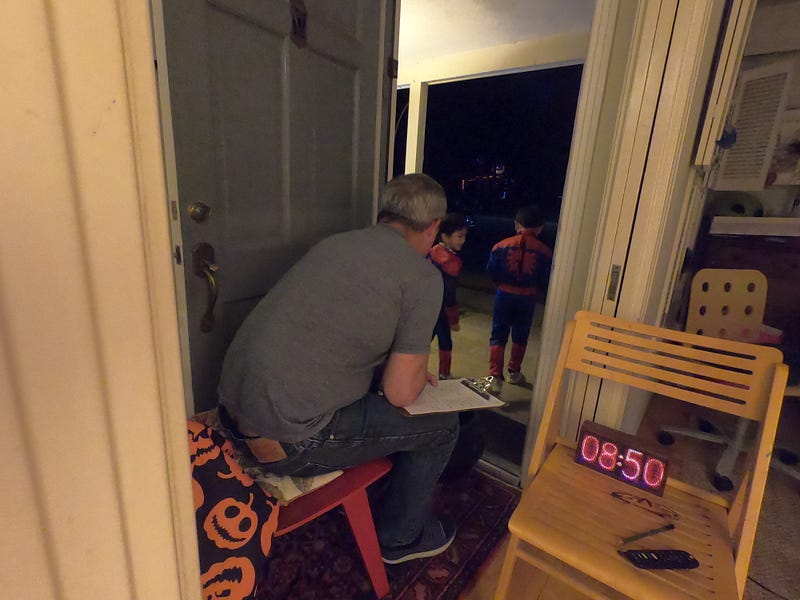
Pikachu, wearing a vest, carrying a doll as the candy bagTwo Mighty Pups from Paw Patrol choosing LED ringsTwo Axolotl choosing candyWinnie the Pooh & TiggerTwo Spidermen help finish out the evening
You can see the clipboard I use to write down what the kids tell me they are dressed as.
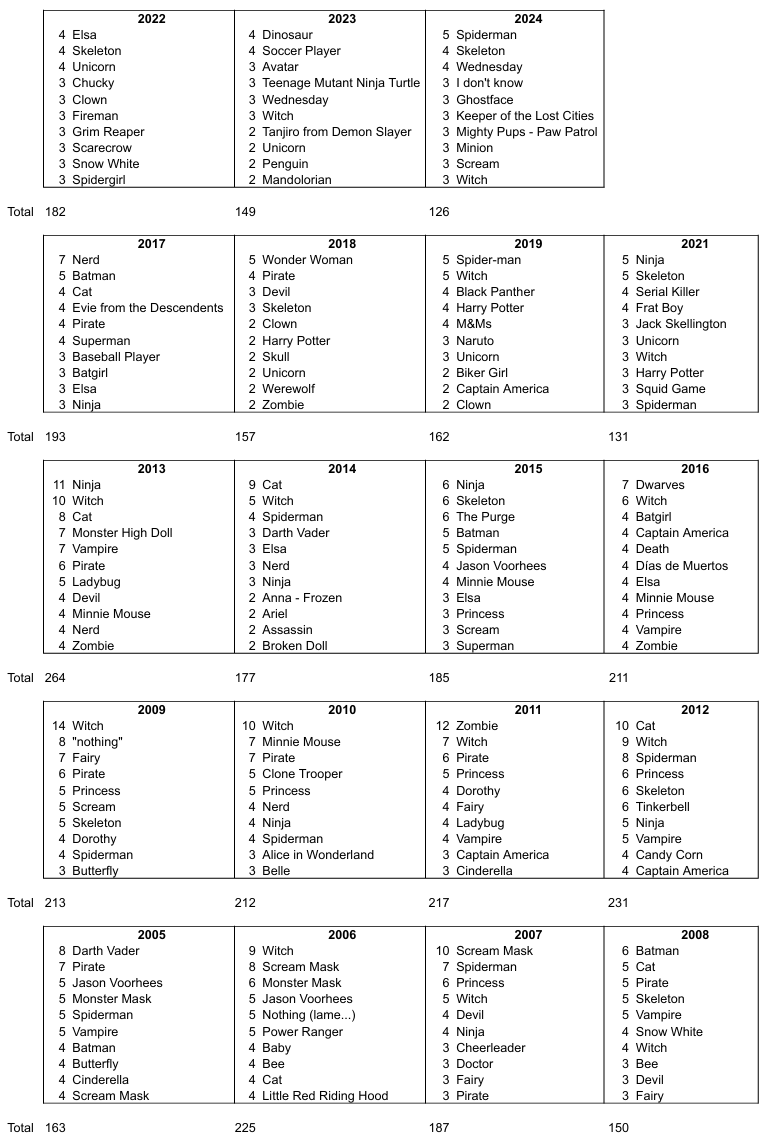
A drop in visitors this year. Seemed like a quieter night.
Spiderman, a perennial favorite. Wednesday maintaining a ranking from last year. I’m told Keeper of the Lost Cities is a popular book series.
This year’s complete costume list of 126 people:
3 “I don’t know” 1 Alien 1 Angel 1 Asha from Wish 1 Astronaut 2 Axolotl 1 Bam Bam 2 Batman 1 Black & White Rabbit 2 Butterfly 2 Cat 1 Cheetah 1 Chester the Cheetah 1 Chipmunk 1 Cobra Kai 1 Coraline 1 David Martinez 1 Deadpool 1 Demon 1 Dexter Morgan 2 Dinosaur 1 Dodgers Fan 1 Dolores 1 Dragon 1 Eileen & Rigby 1 Eric Cartman 1 Fireman 1 Freddy Krueger 1 Frog 1 Ghost Spider 3 Ghostface 1 Grandpa 1 Guy in Bandana 1 Gwen Stacey 1 Hermione 1 Hocus Pocus 2 In ‘n Out Person 2 Jack 1 Joy from Inside OUt 1 Juan Ramon 3 Keeper of the Lost Cities 1 Kiki from Kiki’s Delivery Service 1 Koala 1 Lara Croft 1 Magician 1 Mal from The Descendants 1 Max 1 Max from the Goofy Movie 1 Max the Goofy Dog 1 Michael Meyers 3 Mighty Pups — Paw Patrol 1 Miles Morales 3 Minion 2 Minnie Mouse 1 Mummy 1 Ninja 1 Person with lights 1 Pikachu 1 Pilot 1 Police 1 Princess 1 Princess Peach 1 Pumpkin 1 Pumpkin Grim Reaper 1 Raccoon 2 Robber 2 Sally 1 Scary Clown 3 Scream 1 Simon from The Chipmunks 4 Skeleton 1 Skunk 1 Snow White 1 Sorceress 5 Spiderman 1 Stay Puft Marshmallow Man 1 Superman 1 The Grinch 1 The Riddler 1 Tiger 1 Tigger 2 Troll 2 Unicorn 1 Vampire 4 Wednesday 1 Winnie the Pooh 3 Witch 1 Wizard 1 Wolf 1 Wybie from Coraline
My friend, Scott Watson, died six years ago in a plane crash.
There are some stories about Scott I wanted to share to highlight his genius.
I don’t know if anyone else will read this, but I felt the need to write this down before I forget or shuffle off this mortal coil myself.
Scott on the Playa
Scott and I met in 1995 when I first joined Disney. I was with the Disney Channel and Scott was with Imagineering and neither of us would stop talking about “the internet”. Scott had registered the domain disney.com and was scott@disney.com as a result.
We bonded over being tech geeks and sharing the love of making new things.
I explained how television technology worked and he explained much of the mysterious world of software to me. In the days before cybersecurity locked everything down we did stuff like setting up internal IRC servers on boxes running early linux distributions to chat during the workday.
There’s a few projects that Scott did that I’ll go into a little detail on. If you are not into the deep magic of the interwebs, it might not make a lot of sense. But I’m going to write it up anyways.
Go Radio
As the internet started to hit the news and get popular, audio streaming over the internet was a hot topic. At the time, to stream audio required a dedicated server running something like rtmp or the proprietary Realplayer server. Running these kind of servers was expensive and didn’t scale well.
The other new thing in the corporate world was caching images in a internet proxy server since internet bandwidth was expensive. The caching was extensive as most of the image assets were easy to track by site and filename and almost all internet access was via proxy servers.
We were bullshitting about “push technology” and other early web ideas when Scott had the idea about disguising audio files as images to get them cached in the proxy servers.
Disney had recently launched the ill fated Go.com portal and adding features to it was on the mind of Disney’s tech execs. After a bit of testing, Scott proposed Go Radio, which was a service on go.com to stream audio using mp3s (I think) disguised as image files so they’d be stored in enterprise proxy servers, reducing the bandwidth cost and eliminating the need for dedicated streaming servers.
And in the heady days of Web 1.0, Go Radio launched and was popular. We even were able to insert precious advertising spots to earn that filthy lucre.
Once the portal era and go.com evaporated, internet access to the companies expanded and newer streaming tech took over eliminated the need for Go Radio, but it was a wonderful hack that Scott came up with.
Interactive Monday Night Football
In the late nineties, I got involved with the first serious attempts to do interactive television. This holy grail of network television execs was to magically make money by people interacting with a broadcast television channel.
Web TV had launched and made a splash that had the TV execs salivating. For those that don’t know, Web TV was a small computer that used a television as a screen and phone line for internet access via an internal modem. It was a cheap way to get online, but several features were in a kind of walled garden arrangement, similar to AOL at the time. Microsoft bought Web TV soon after launch and it became a hot topic.
The TV engineers got together with a group of the nascent internet engineering community and formed the standards group ATVEF. I brought Scott along to the meetings, as my coding skills are non-existent.
In the older analog tv standard NTSC, there were specific “lines” in the signal format that allowed for transmission of digital data over the broadcast signal. TV engineers used these lines for sending triggers for broadcast gear, like the logos that pop up in the corner when you are watching a local TV station or test signals.
The idea at ATVEF was to have a standard for sending code via these lines that could be acted upon by devices that had TV tuners
Scott, as usual, came away energized and had big plans.
Scott helped build out a team that created a system to send out the interactive TV data to allow people to play games along with ABC’s Monday Night Football. He was able to convince the Disney/ABC execs to allow the data to be injected into the national ABC feed, the holiest of holys in broadcast terms.
While it was a limited audience of people who could see it, it was one of the first real uses of interactive TV. An amazing effort on the cutting edge of internet and television technology at the time.
Moviebeam
Scott was truly fascinated by the idea of sending digital data over the analog broadcast signal. “datacasting” was the term we used. Once he finished with interactive TV he had a new idea.
Believe it or not, in the time before widespread broadband, downloading an entire movie could take hours. Media companies were interested in ways to allow digital viewing besides DVDs. At the time, this was a hard problem to solve. “Fast” broadband at the time was a 3 Mb/s DSL line.
We discussed the issue a lot, despite many at Disney wanting the internet to go away.
Scott latched onto the idea of using the NTSC data streams to send movies to a device in the home. The transfer would be quite slow, but with a device listening 24 hours a day, it just might work.
And so Scott began on his quest to make Moviebeam happen.
The concept was caching movies on a box in someone’s home and when they wanted to watch it, they could purchase/rent it and it would unlock to be played. Kind of like a mini Redbox kiosk in your house.
He pitched the idea to the notorious Strategic Planning group at Disney and they greenlit it.
Soon, Scott was on trips to South Korea to coordinate with manufacturers on how to build set-top boxes that could listen to the on-air broadcast, store the data, and playback movies to a TV. I remember him trying to explain how easy it was to learn the Korean alphabet and read Korean.
Believe it or not, it all worked and I remember seeing the boxes in Best Buy. Again, an amazing technical achievement at the time.
Wrap-up
I’m not sure why I felt the need to write this. It’s been sitting in my mind for a while.
Scott was an inspiration to me and I think of him often.
I guess I just wanted more people to know what kind of special person he was and what we lost.
I am a beekeeper and went to go see The Beekeeper movie.
tl;dr: If you liked John Wick, go see it.
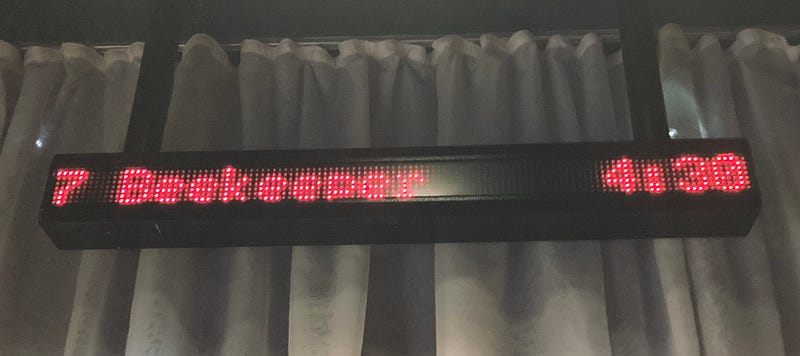
The early showing on opening day
Very much in the style of previous Jason Statham action films, the plot is just a device to take us from one fight scene to another.
The bad guys are flamboyant phone scammers and our hero goes after them with a calm determination. There are gaping plot holes, but no one in the theater will care.
Highlights include actual beekeeping scenes, a secret beekeeper lair, the surprise appearance of an Australian supervillain type, and a few bee puns.
Intertwined with the beekeeping, we have a FBI special agent tracking down our hero, with both a drinking problem of some sort, a hapless partner, and torn loyalties between “the law or justice”.
It’s a mindless popcorn movie, similar in many ways to the John Wick series.
I told my wife, Michele, that there needs to be a crossover between the Beekeeperverse and the Wickiverse and she said “There’s not enough ammo in the universe for that.”
But now onto the important stuff.
How was actual beekeeping portrayed in the movie?
Was it Hollywood nonsense, or was it accurate?
In short, pretty damn accurate.
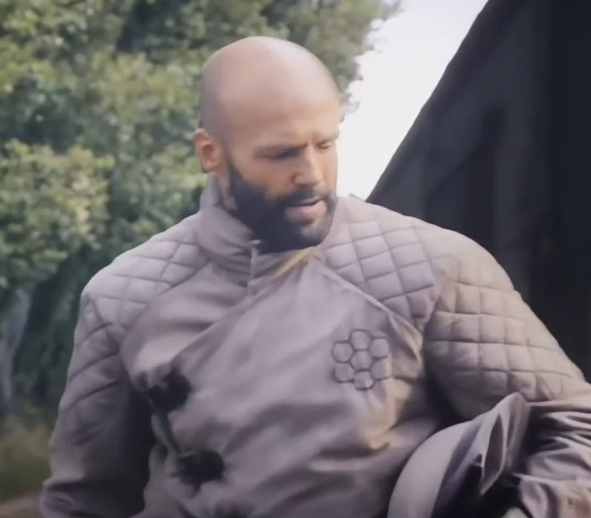
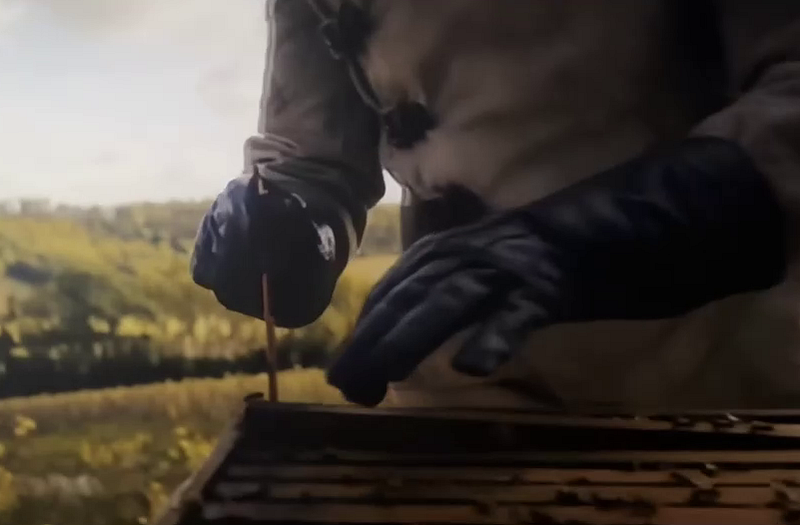
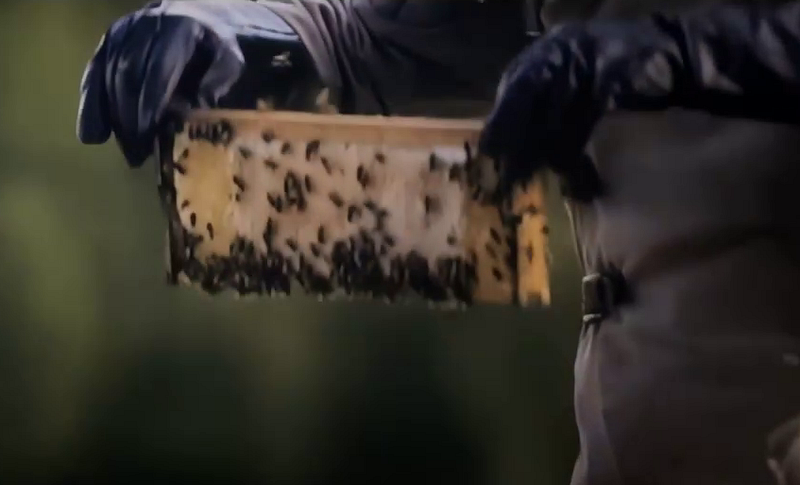
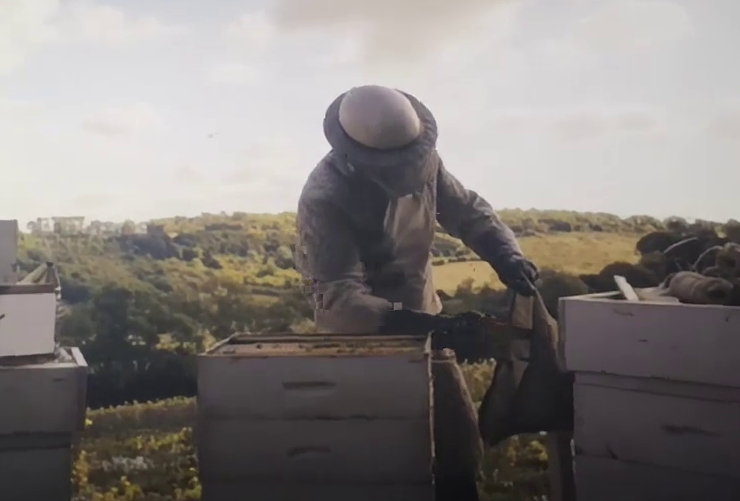
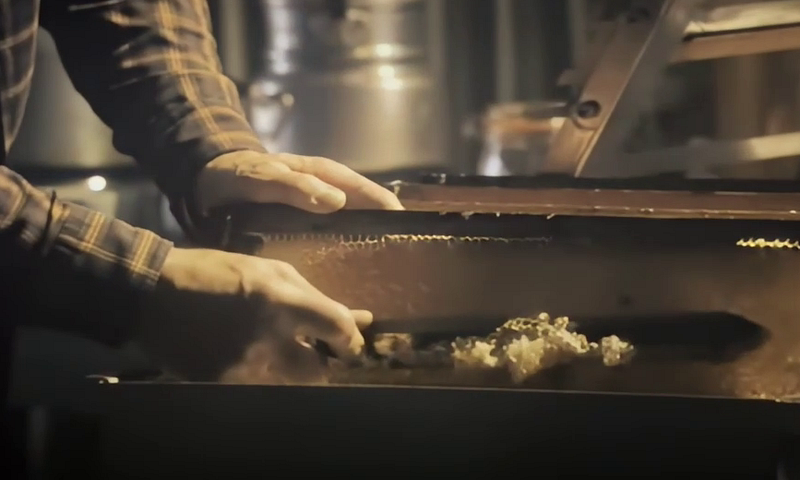
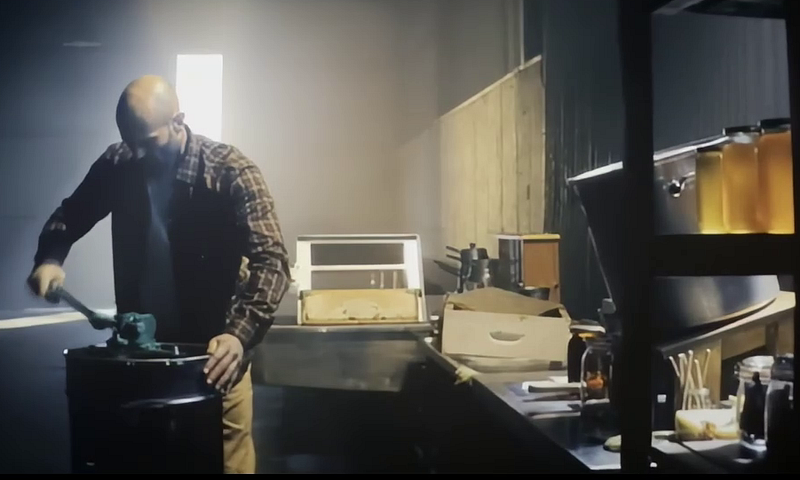
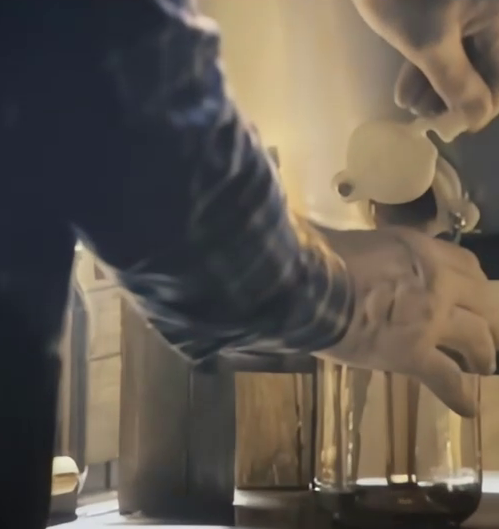
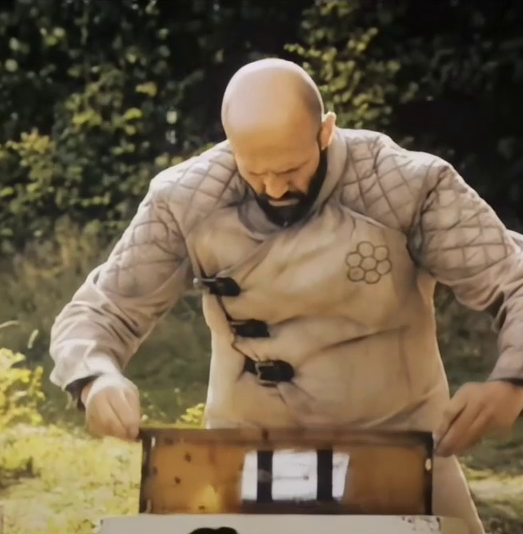
Our hero, beekeeper Adam Clay, wearing a unique jacket. Side clasps are quite unusual. Good to see him wearing full PPE, likely some spicy bees he’s dealing with. Appropriate use of smoke as well. Very accurate use of the j-tool to pull a frame from a honey super box. Doing a quick inspection. Even tilting into the sunlight for the best look. He does a textbook shake to get the ladies off a good looking frame of honey. Also uses a brush to clear the stubborn ones off. He places the honey frames in a bag, which I hadn’t seen done before. A real uncapping knife used to prep the frames for extraction. A manually cranked two frame extractor with lots of beekeeping gear on the worktable. Filling a large jar from the honey bucket, with the bucket on a tilted stand. Retrieving a Beekeeper comms device hidden in a hive box. Usually we find these covered in a lot of propolis and not so easy to remove. The typical login screen we Beekeepers see when regularly logging into the secret black ops system for wetwork assignments. Look like maybe one update behind the current software version.
The director did a great job of accurately portraying this part of beekeeping and I give it a thumbs up.
Hopefully in The Beekeeper II, we see our hero treating for varroa mites!
Over the last two years I had read about previous Hive Life conferences and how they were focused on hobbyist and sideliner beekeepers and encouraged a lot of social interaction. My experience at the California State Beekeepers Association meeting a year ago had soured me, as most of the conference was for commercial beekeepers and topics were focused on them.
When I heard about the NAHBE conference and the list of presenters, I decided to go, even though it was a plane trip away in Louisville, Kentucky.
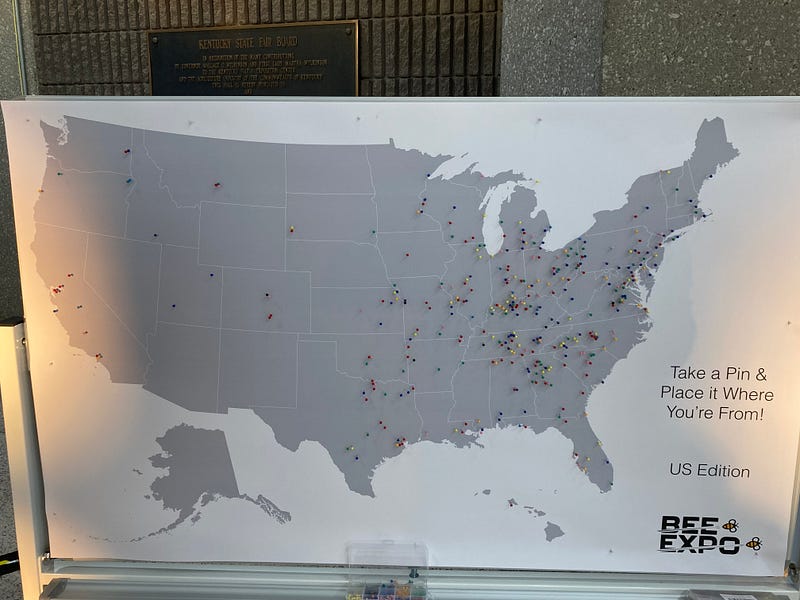
Attendee map of the US
I’m so happy I decided to go. The conference is well run and we were amazed at how quick everyone marched into the Expo, got badges, and were inside out of the cold.
Compared to all the other cons/conferences I’ve been to, this one was amazingly glitch free with no problems and a great setup. Kudos to the NAHBE team on fantastic organization.
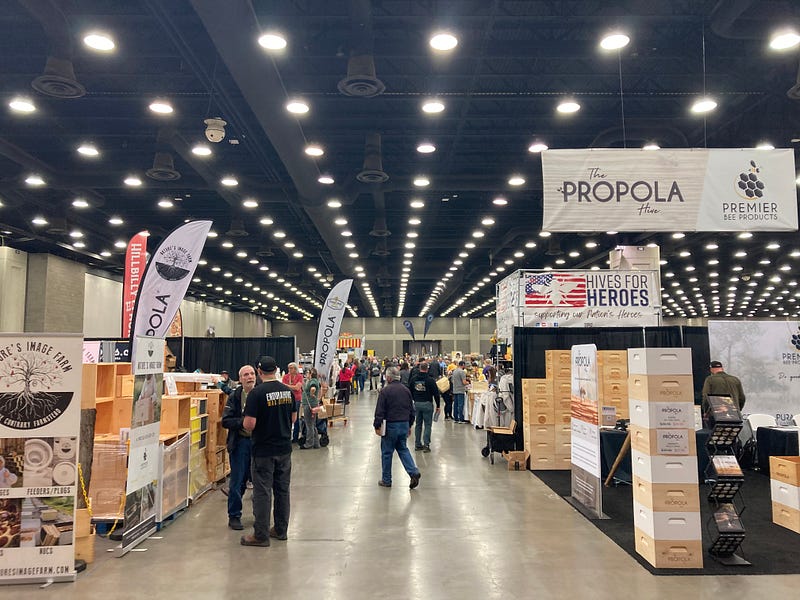
The trade show was impressive. There was not a big brand missing and many other companies I had never heard of had great stuff.
If you are a beekeeper, I seriously recommend you consider attending.
Conference was at the the Kentucky Expo Center — great facility
Here are my notes from the sessions I attended:
Day One at the North American Honey Bee Expo in Louisville, Kentucky.
The exhibitor floor is huge and we just scratched the surface of it. So many familiar names & brands there to look at and the ability to see how a lot of things actually work. There are demos of everything.
Went to the opening and first talk by Randy McCaffrey aka 628DirtRooster. Was mainly pictures and stories about cut-outs and all the notes and details he takes that don’t make it into his YouTube videos. I’ll have to do better with my cut-outs.
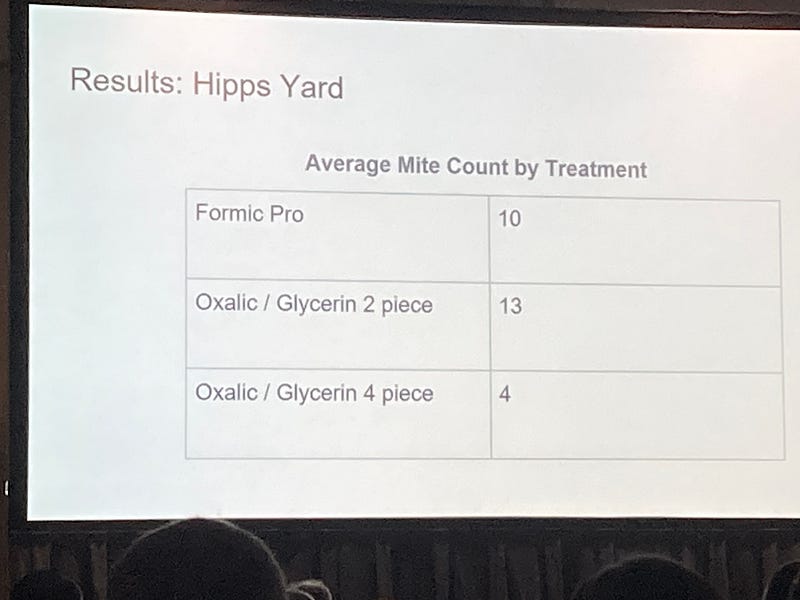
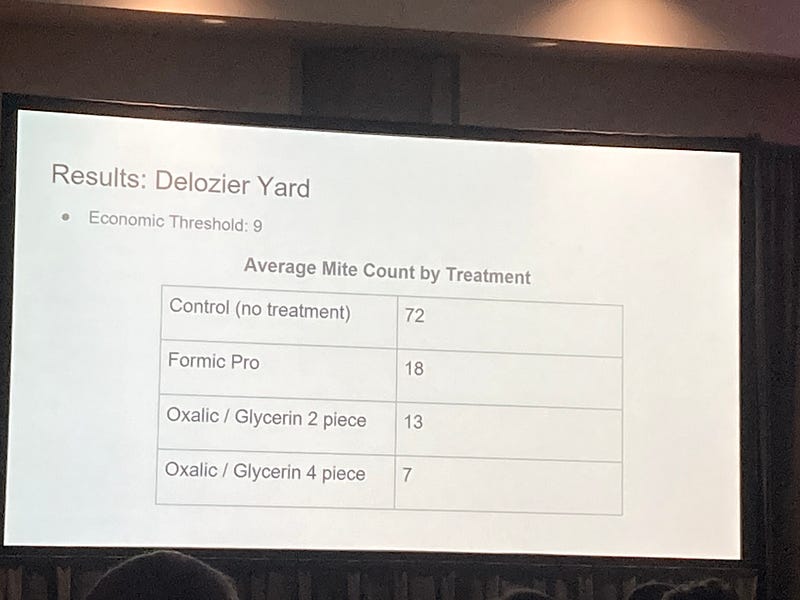
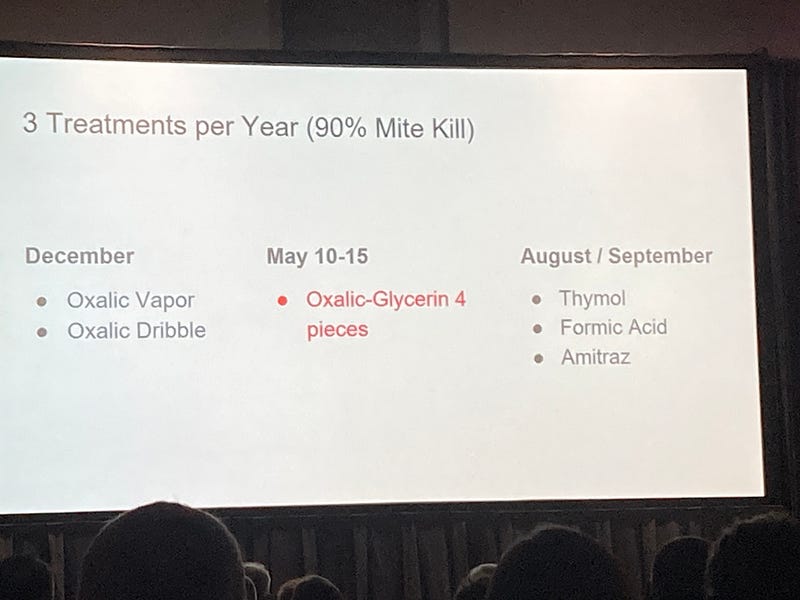
Greg Rogers talked about the Oxalic Acid Extended Release Field Trial he did last year in North Carolina.
In summary, the oxalic acid with glycerin on cellulose pads appears to work very well when you start with a low mite levels and will prevent significant rises in mite levels.
Comparing usage of extended release methods for varroa control Comparing usage of extended release methods for varroa control Recommended treatment plan based on experiment results
He stressed the key is starting with a low mite level. If you start with a high mite level, it will not reduce it.
The conference is perfect for hobbyists and sideliners. Everyone is excited and happy to chat with strangers. The vendors talk with everyone and there is tons to see and learn.
The vendor area was gigantic
Dinner in downtown Louisville was great with cocktails and amazing chicken, cornbread, hush puppies, etc.
Day Two at the North American Honey Bee Expo (NAHBE) in Louisville, Kentucky.
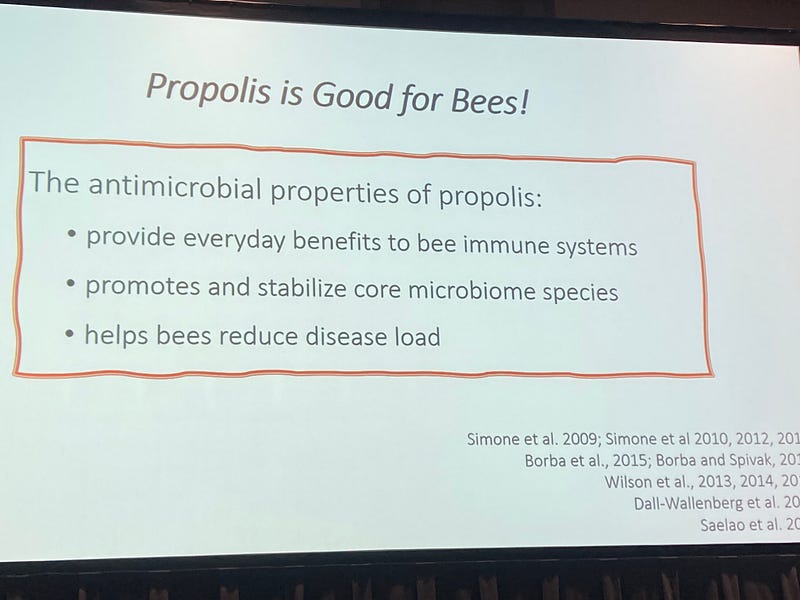
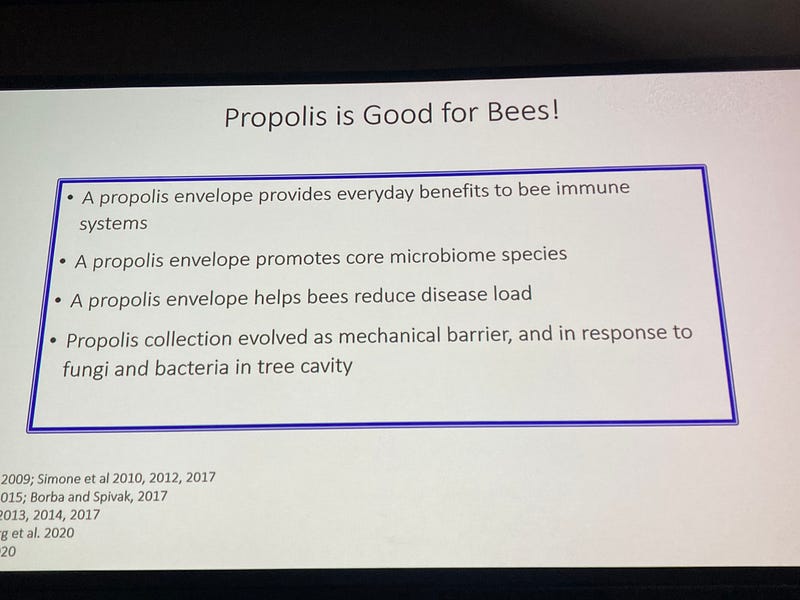
Dr. Marla Spivak talked about “Why care about propolis?”
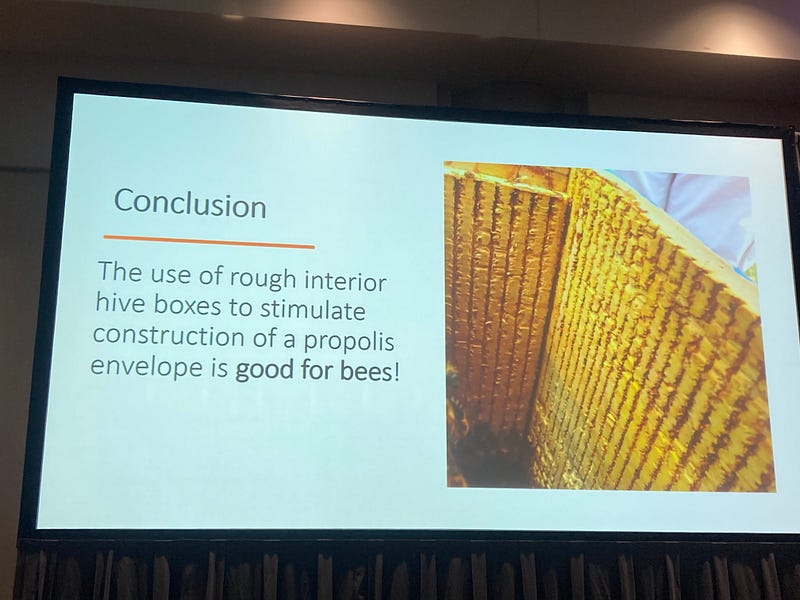
In short, a good propolis envelope significantly helps colony health and doesn’t affect honey production in strong hives.
Key takeaway on propolis
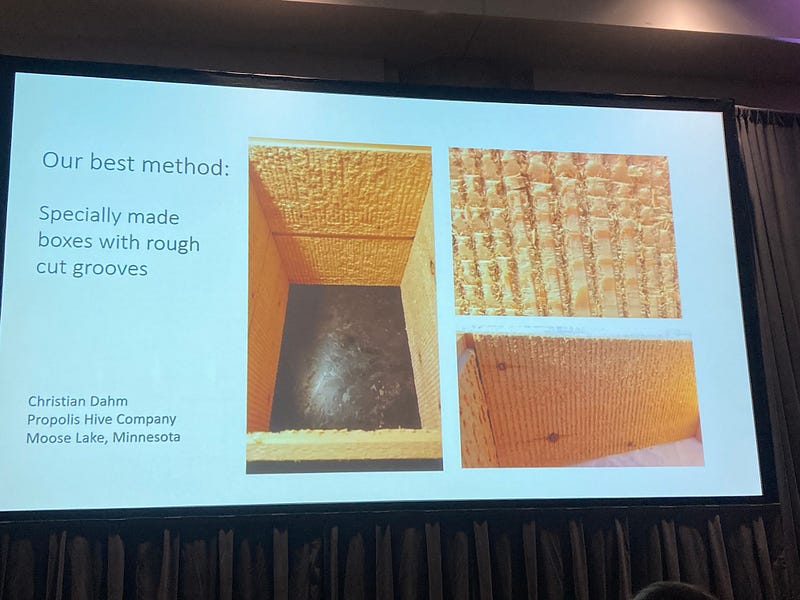
Use of rough box interiors was best for propolis envelope. Rough meaning seriously rough, with deep grooves, not simply scratched.
There are boxes coming on the market with varying levels of interior roughness.
The grooves the bees filled with propolis were seriously deep.
As far as human use of propolis, making tinctures from propolis is best when using 70%+ ethanol.
Dr. Cameron Jack spoke about “The Ins and Outs of using Oxalic Acid as a varroa control”
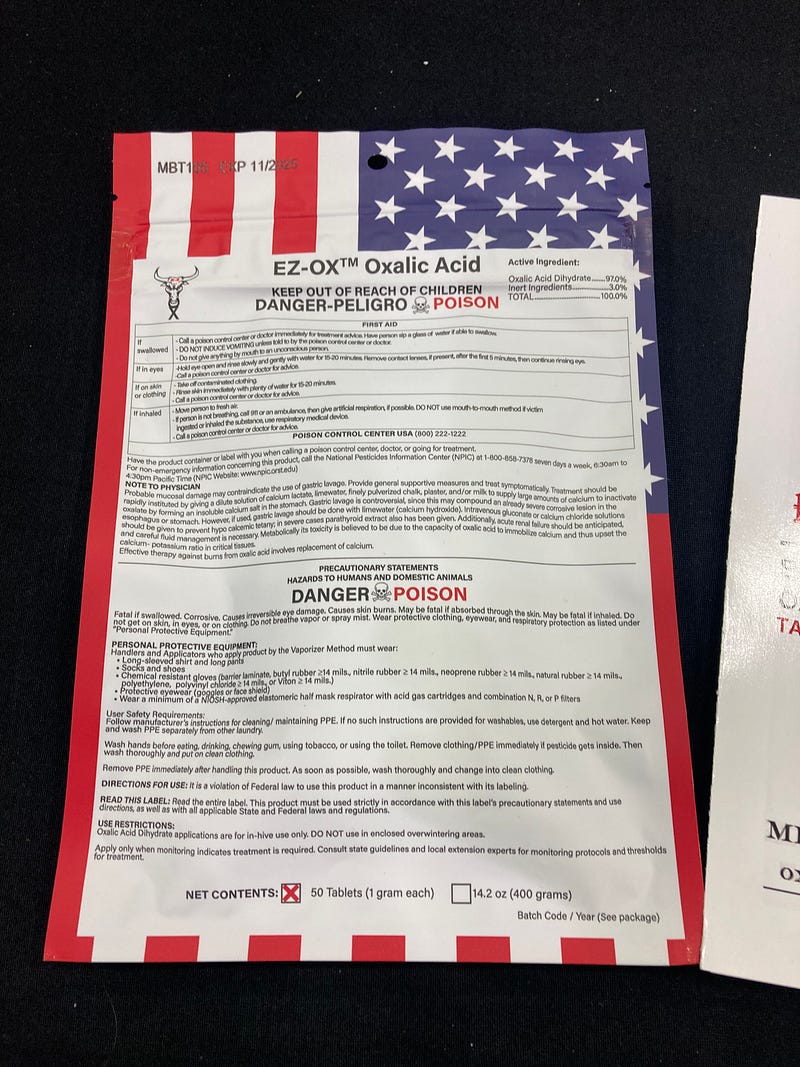
Started with reminders about safety and using respirators & eye protection.
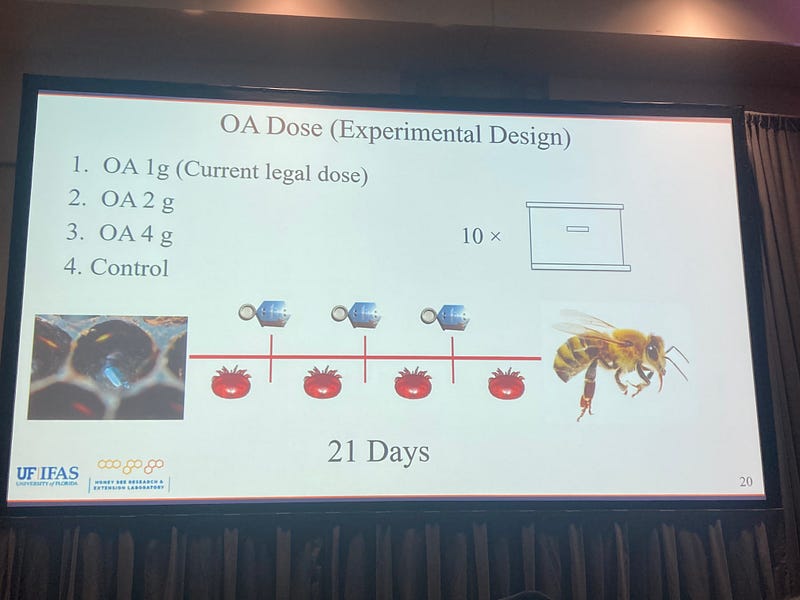
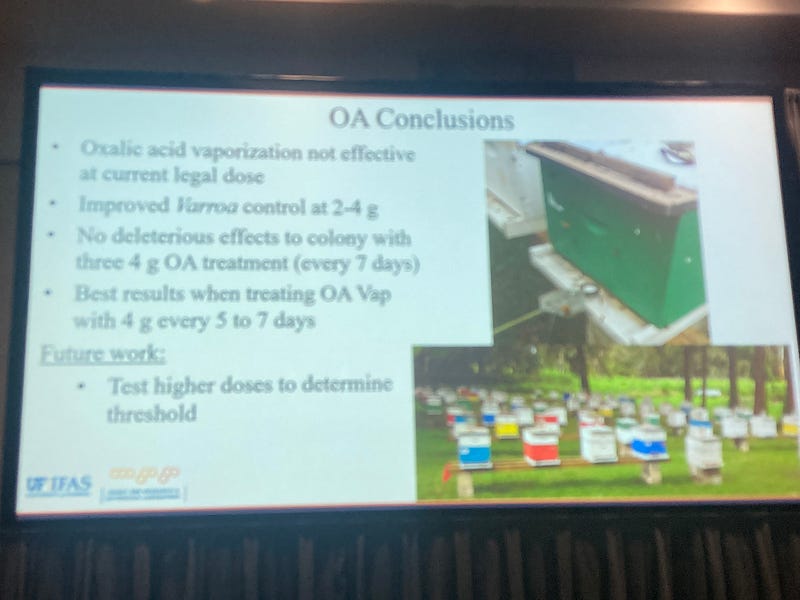
The legal versions are 1g per brood chamber, but testing with 1g didn’t show effectiveness. Many anectodal reports said higher doses are needed.
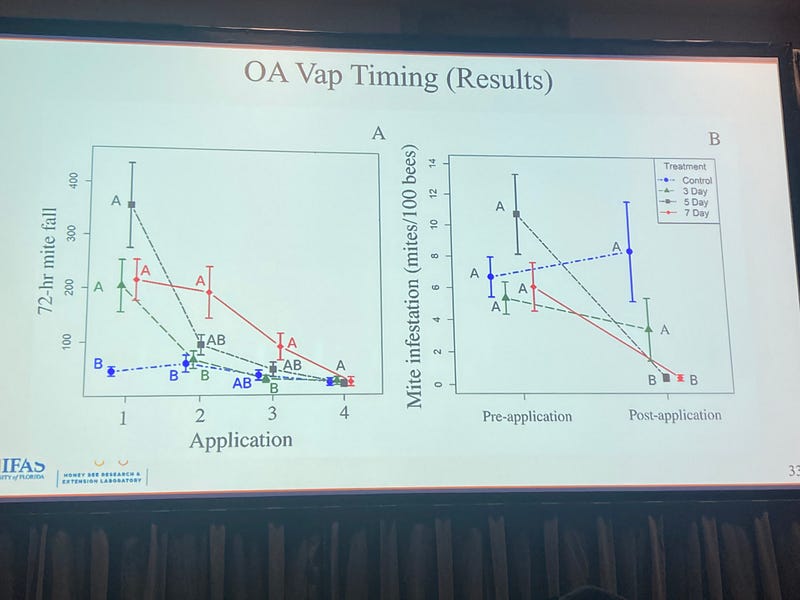
Testing methodology for Oxalic Acid Vaporization dosage
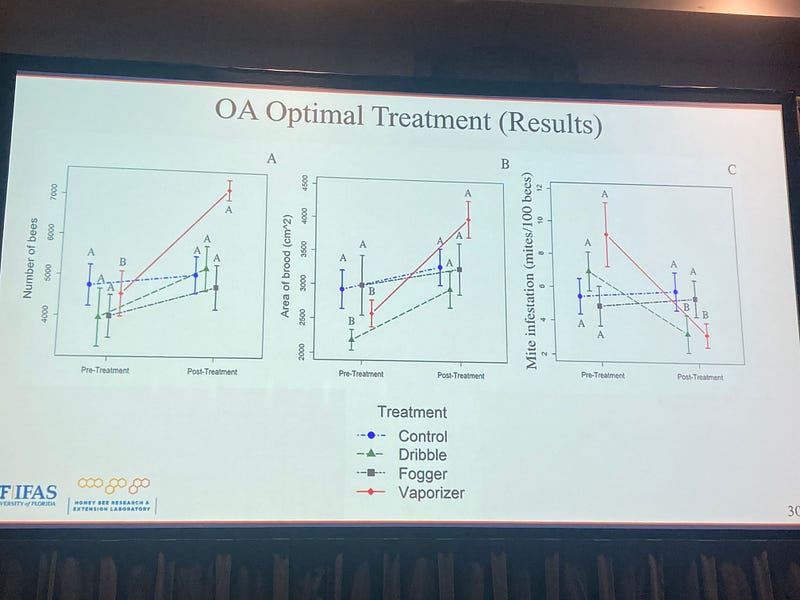
Experiments showed the 4g dose was optimal. No statistically significant impact on bees, brood, honey, or pollen.
Tested dribble vs. vapor vs. fogger and vaporization was most effective (using 4g dose).
Results comparing dosage methods
4 applications of 4g of OA vaporization in 5–7 day cycle is optimal. 10 minute hive seal up time is recommended.
Results comparing treatment timing
OA extended use pads appears to hold mite levels steady, but not reduce high mite levels.
No impacts on queens observed with OA use.
Final conclusions of the presentation
Work continues with the FDA for formal approval of vaporization use in higher doses and extended use pads, but progress is slow.
The new EZ-OZ oxalic acid pellets & powder are FDA approved for use at the 2g level, which is an example of the slow move forward.
Richard Noel spoke about “The Yellow Legged Hornet aka Asian Hornet”
Hornets stress the colonies to the point they cant fight varroa and then collapse. Hornets only directly attack deadouts or very weak hives.
Hornets depress entire local ecosystem by killing all insects they can find, not just bees. We saw scary videos of hornets “hawking” outside hives, hoving in front of entrances waiting to kill foragers.
There are several trapping tactics used. Spring traps capture founding queens which is optimal. Autumn traps also capture queens before winter.
When ground level nests are found, they are removed, but are huge. Nests high in trees are shot with pesticide paintballs.
Addressing the issue means involving the entire local community, just beekeepers isn’t enough.
Day Three at the North American Honey Bee Expo (NAHBE) in Louisville, Kentucky.
Natalee Summers spoke about Resource Hives
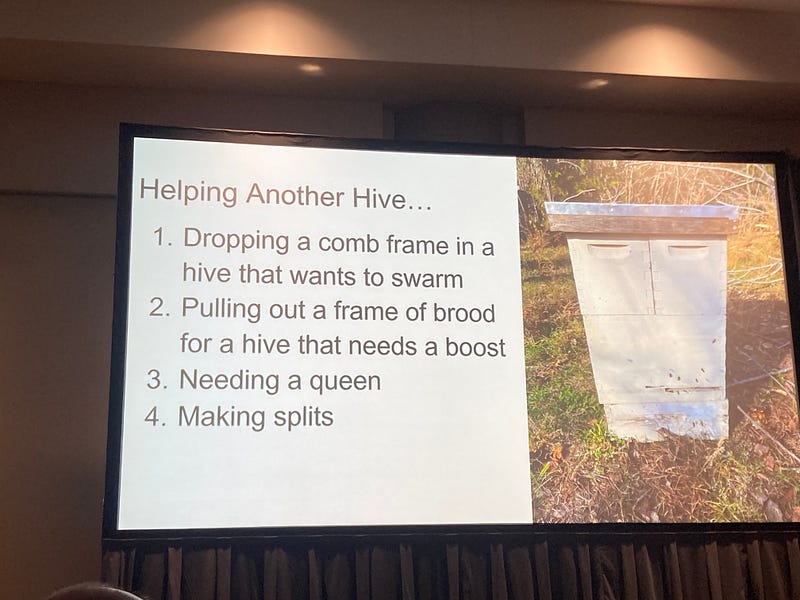
Basically putting in supplemental hives in the apiary to help have resources for production hives.
Michael Palmer calls them Brood Factories.
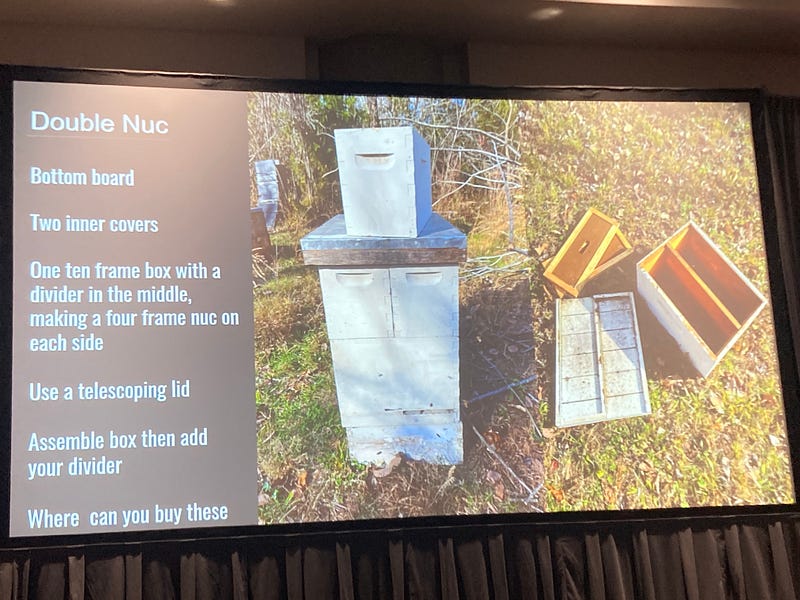
Typical resource hive set-up
Typical setup is a double nuc box, 10 frame box with divider in the middle. HillCo makes them and calls them “Queen Castles”. Saw a few other box designs that could be used.
Typically start a resource hive by using a split. Swarms can also be used.
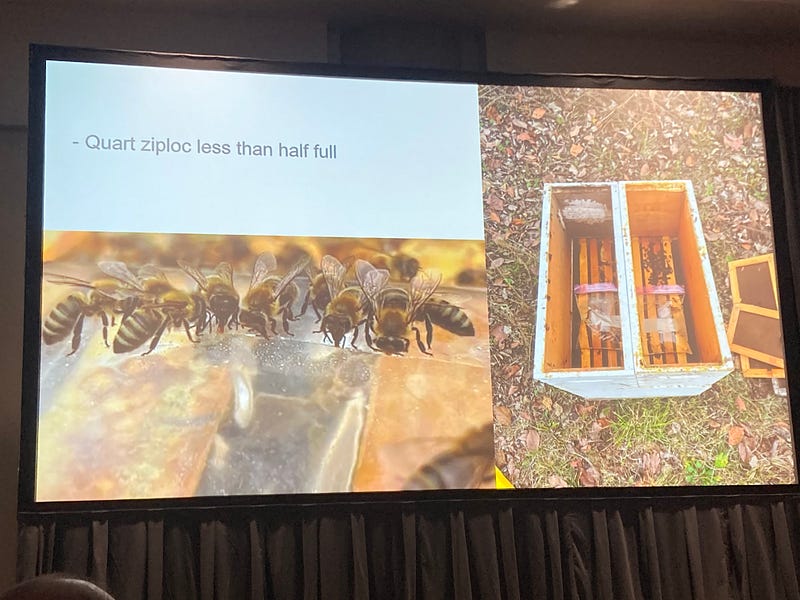
Showed a technique of feeding syrup from a quart sized Ziploc bag.
Using quart ziploc bags as syrup feeders in the nuc boxes
Being able to support production hives with frames of comb, brood, or even a queen is the goal.
Dr. Marla Spivak spoke on Social Immunity in Honey Bees
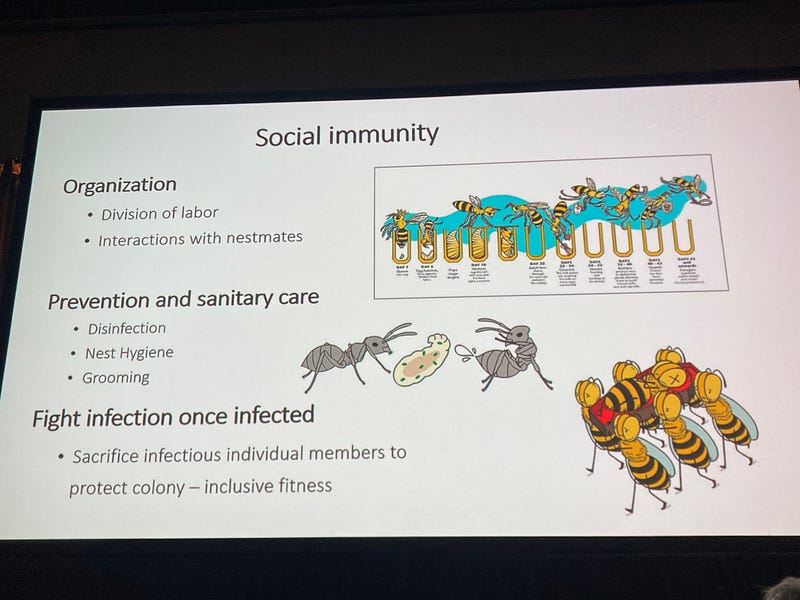
The talk was about the overall health of the colony and how it is helped.
How bees support the colony
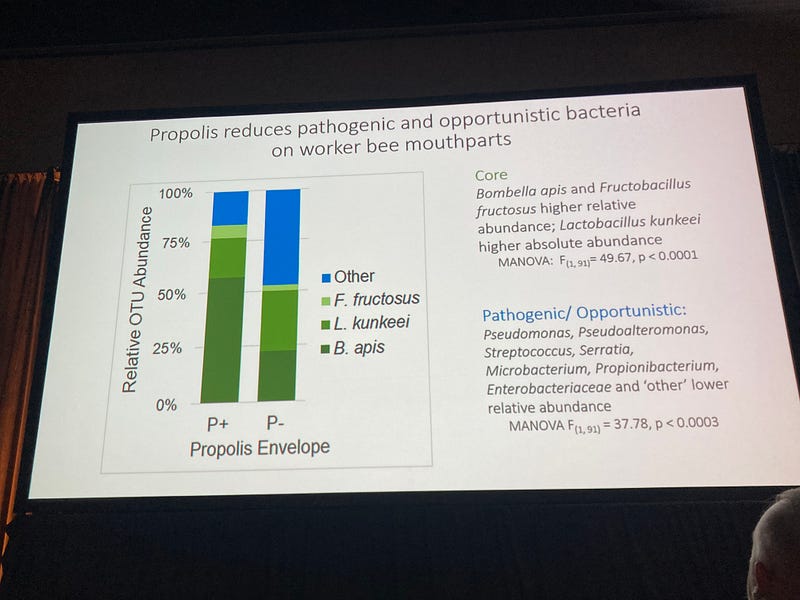
Propolis envelope lowers the overall disease load, prevents bacterial growth in food, and acts like an external immune system.
Propolis envelope has positive effects at microbial level
Beneficial bee bacteria appears to have some resistance to propolis.
Bees collect more propolis when colony is sick.
Propolis is a significant help to colony health
Experiments continue on hygienic behavior (removing sick larva from brood) and how determining how it is triggered.
The VSH/POL bee lines are shown to actively remove varroa infected brood. Evidently, bees detect mite infected cells AFTER egg laying has begun.
They open the cells to inspect and determine if the pupae needs to be removed.
The “selfie wall”
Overall, the NAHBE was a great experience.
Everyone was positive and engaged and wanted to talk beekeeping. No negative energy or politics.
Talking with vendors was informative and helpful. Saw a huge range of products and spent too much. Had to pack an extra duffle bag to carry everything home on my flight.
Kudos to Kamon & Laurel Reynolds and the entire team on a flawless event.
1. We give out full size candies 2. Make a listing of all costumes 3. Make a timelapse movie
I let the kids choose their favorite candy themselves. This can sometimes lead to a prolonged choosing process and debate. The moments of “OMG” and “wow” are wonderful as they realize the candies are full size.
Hearing the kids get excited about full size candies makes it all worth it.
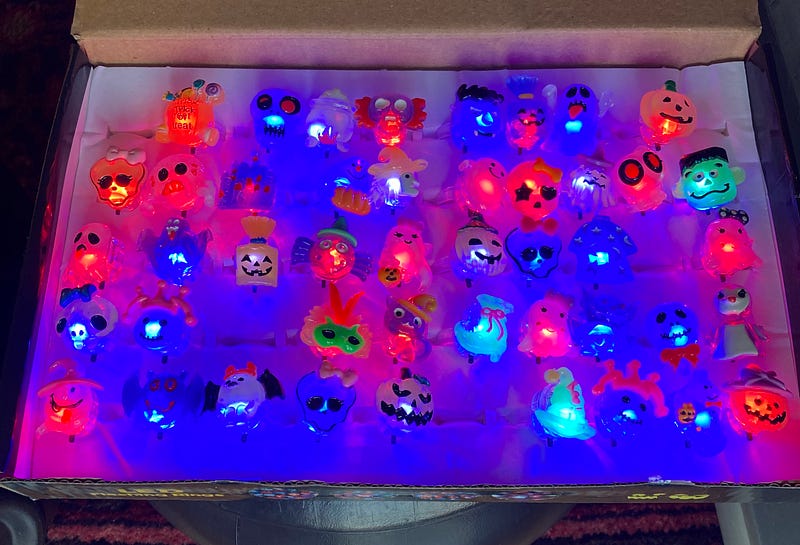
I also gave out LED light up rings this year. They were a hit.
Kids would spend more time choosing a ring than candy.
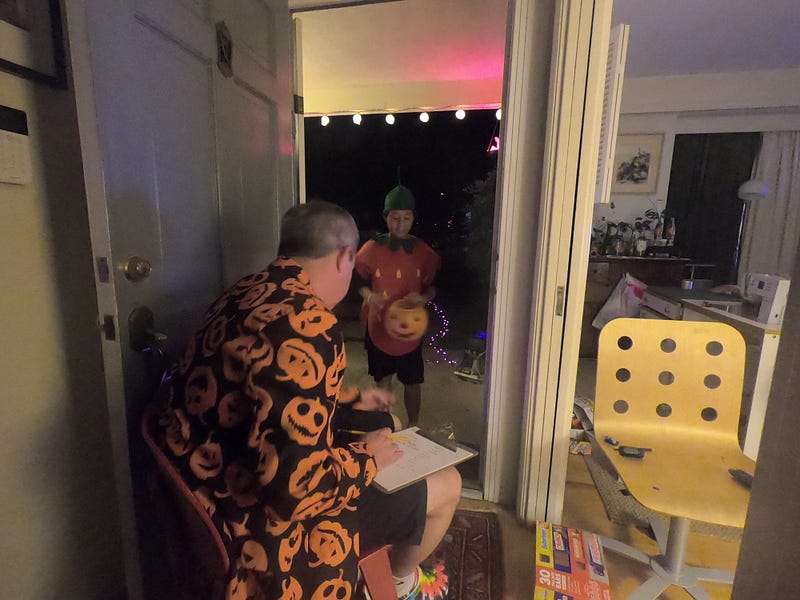
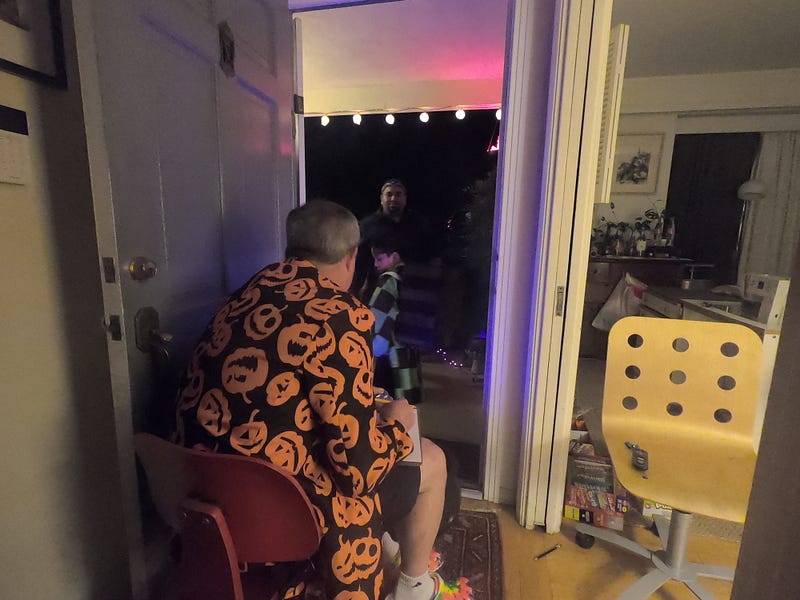
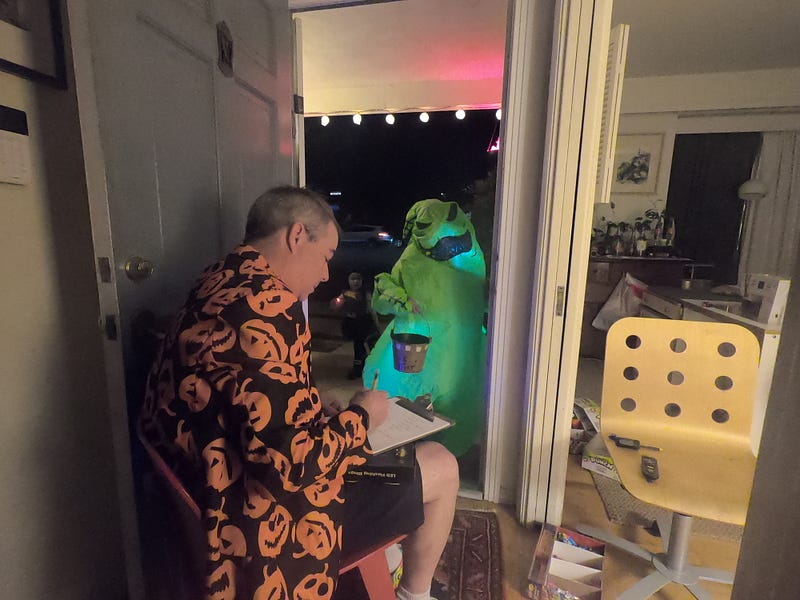
When people come to the door, I ask every person what they were dressed as and wrote down their answers. I am careful to ask what they are, accepting their answers rather than interpreting what I see.
The time-lapse takes place over about two and a half hours that is reduced to just under 90 seconds for your viewing pleasure.
A few of the costumes I liked this year.
StrawberryTanjiro from Demon SlayerOogie Boogie from The Nightmare Before Christmas
You can see the clipboard I use to write down what the kids tell me they are dressed as.
A small drop in visitors this year. Didn’t quite get the crowds we have had in the past.
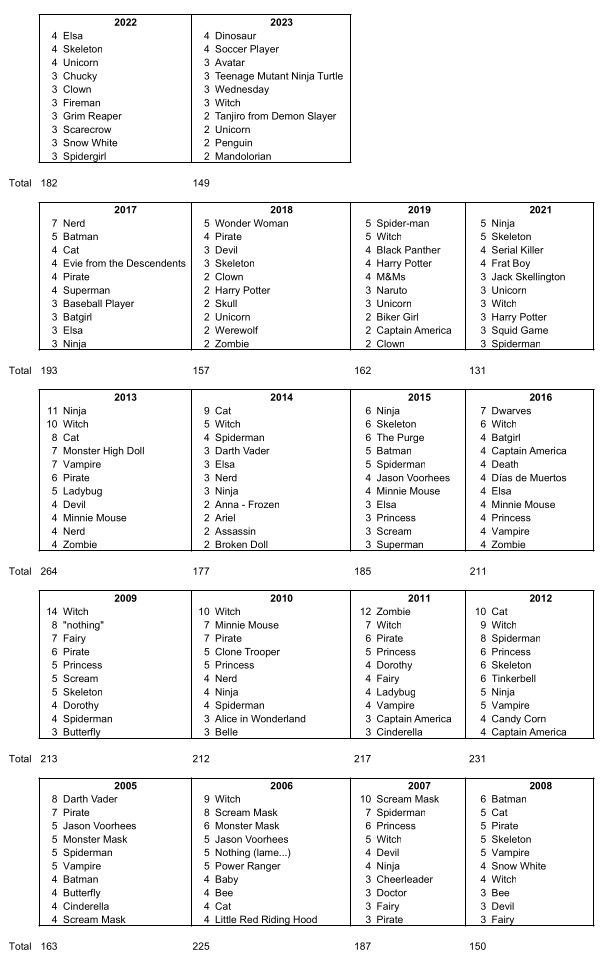
A bit of a change from last year with Dinosaur & Soccer Player topping the chart. A few of the costumes from TV & movies, but the usuals from the past not really making an impact. Only a couple Barbies, as I had expected more.
This year’s complete costume list of 149 people:
1 Alien 1 Alvin (Alvin & Chipmunks) 1 Angel 3 Avatar 1 Barbie 1 Batman 1 Bingo 2 Black Panther 1 Border Collie 2 Cat 1 Chester Cheetah 1 Cholo 1 Cinderella 1 Cinnamoroll 1 Clown 1 Construction Worker 1 Cool Black Outfit 1 Cop 1 Cowgirl 1 Cup of Noodles 1 Daft Punk 1 Damian from Mean Girls 1 Demon 4 Dinosaur 1 Doll 2 Elsa 1 Fairy 2 Fall Guy 1 Franchise 1 Ghost 1 Goose (fighter pilot) 1 Grim Reaper 1 Gymnastics Coach 1 Harley Quinn 1 Harry Potter 1 Hedgehog 1 Hello Kitty 1 Helper 1 Her Dad 1 Hit by Truck 1 Hogwarts Student 1 Iron Man 1 Isabella 1 IT 1 Itachi 1 Jake 1 Jason Voorhees 1 Katrina 1 Kazuko from Demon Slayer 1 Ketchup 1 Killer Lumberjack 1 Koala 1 Kuromi 1 L from Deathnote 1 Lebron 1 LED Man 1 Light from Deathnote 1 Link 1 Lisa from Deathnote 2 Luigi 1 Mad Hatter 1 Mad Scientist 1 Magician 1 Maid 2 Mandolorian 1 Mario 1 Marshmellow 1 Maverick (fight pilot) 2 Michael Meyers 1 Minecraft 1 Mira 1 Netsuke 1 Ninja 1 OC 1 Oogie Boogie 2 Orange Girl 2 Penguin 1 Poison Ivy 1 Pompompurin 2 Princess 1 Pummy 1 Quincy Morris 1 Rake 1 Robber 1 Ronaldo 1 Sally 1 Sarah Sanderson from Hocus Pocus 1 Scary Person 1 Scream 1 Secuna 1 Shinoda 1 Simon (Alvin & Chipmunks) 2 Skeleton 1 Skeleton 1 Skull 1 Snow White 4 Soccer Player 1 Softball Player 1 Sonic the Hedgehog 1 Soulja Boy 2 Spiderman 1 Spiderwoman 1 Stick Man Figure 1 Stitch 1 Strawberry 2 Tanjiro from Demon Slayer 3 Teenage Mutant Ninja Turtle 1 Teenager 1 The Hulk 1 The Purge 1 Theodure (Alvin & Chipmunks) 1 Tree 1 Trillionaire 1 Undercover Vampire 2 Unicorn 1 V 1 Vampira 1 Vampire 3 Wednesday 3 Witch 1 Woody