Due to being a professional broadcast television engineer, I often get asked by friends and family about buying a new television.
Here’s the tl;dr:
Most TV specs don’t matter for the average viewer.
The two things that do matter are your budget (LED vs. OLED) and the smart TV interface, because a bad UI will make you miserable every day.
Focus on those two choices and ignore everything else.
My advice is usually unexpected, as I don’t really get into the numbers and details of the various models. The truth is that most of the specifications are meaningless to the average person at home watching television. You can look at Wirecutter to see them compare on the subtle technical details, but most people don’t know what they really mean.
Now, serious TV techs will get their hackles up when I say something like that. They live or die on those numbers. How many nits? HDR versions? Refresh rates?
The honest truth is that most people won’t notice the subtle differences in those things because they won’t be watching in a room suitable to see those things.
If you have lights on in the room with glare reflections on the TV, or you aren’t sitting at the proper viewing distance, or the room is too bright, or anything else that makes the room not exclusively focused on viewing television, you can’t see the subtle differences.
Yes, if you are building out a custom room to watch physical Blu-ray discs of films that are mastered properly, what I’m saying doesn’t apply. But most people are just streaming Netflix while looking at their phone half the time.
There is one big technical choice to make that does make a difference. That is the choice between a LED TV and an OLED TV. OLED TVs are noticeably better and command a much higher price, usually at least $1,000 more than an LED version of the same screen size.
So to begin with, you have to choose what you want to spend. If you want to spend under $1,000 go with an LED TV, if you want to spend more than ~$1,250, go with an OLED TV.
The budget decision is key and the first one you need to make.
Once you’ve decided that, it’s all about smart/streaming app TV aspects of the television.
The hard reality is that the majority use of most new television sets today is for streaming media. Your choice should keep this in mind.
Unfortunately, most of the major TV manufacturers are terrible software companies and their smart app operating system is terrible. It’s no secret that the user interfaces of Samsung (Tizen) and LG (webOS) are terrible. Slow, unintuitive, and buggy, these platforms are a headache to operate.
One option is using an external streaming device like Fire TV, Chromecast, Roku, or Apple TV. Personally, I find the Apple TV UI insufferable, but YMMV. If you like using an external device, the main thing you want to look at is how the TV behaves when you turn it on.
Does it instantly bring up the external device? Is it easy to navigate changing the HDMI input? Does the TV make you click through their menus every time you want to use the external device?
This doesn’t seem like a big issue, but when you have to navigate a painful UI every time you use your new TV, it will drive you insane. This is often the case, as some TV manufactures want to sell you services through your TV every time you turn it on.
IMHO, the simplest and most powerful choice is a television that runs the streaming device software natively.
There is a wide range of TVs that use this software, mainly Android TVs (Google), Fire TVs (Amazon), and Roku TVs. This usually provides a faster, more usable UI, and in addition, it often allows you to do everything with a single remote instead of switching between remotes, a common headache.
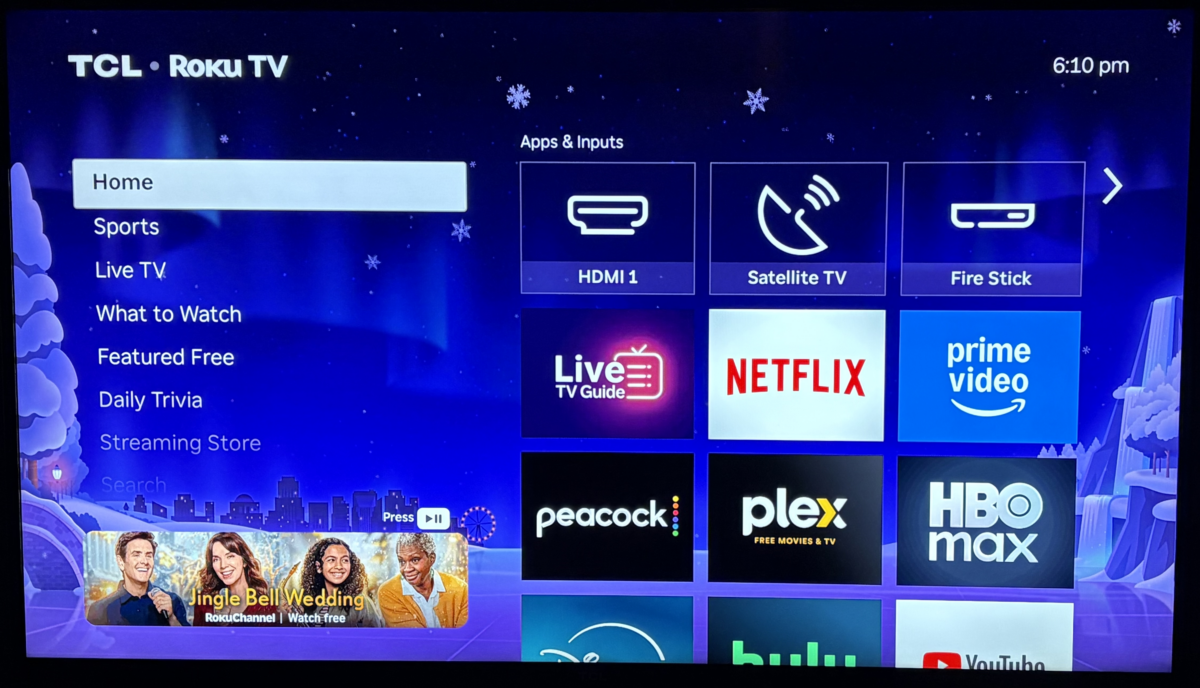
Personally, I think that Roku TVs are the best choice for most people as they are simple for non-tech-savvy people and switching between HDMI inputs (like a PS5, Xbox, or Blu-ray player) is obvious and straightforward.
Sales people and review sites will try to focus on black levels (darker is better), nits (how bright the TV can get), and refresh rates (faster can be good in very specific situations), but the average person is not going to be in a viewing environment where they can see these differences. Again, OLED is significantly better than LED, but you have to have that extra thousand dollars in your pocket if you want it.
These technical considerations pale in comparison to the frustration and anger you will feel repeatedly when using a badly designed UI on your brand new television.
So, IMHO, choosing a new TV comes down to two real choices.
1) How much do I want to spend?
(Under ~$1,000 = LED; Above ~$1,250 = OLED)
2) What smart TV interface appeals to me?
Stick to those two questions, believe nothing a sales person tells you, and make your choice on the UI you are most comfortable using for years.